
Hot One Minute, Cold the Next: Understanding Intense Mood Changes
Carly Wolfram, Licensed Clinical Professional Counselor (LCPC), Doctoral CandidateThis article explores why rapid or intense mood changes do not automatically mean bipolar disorder. The article explains the difference between everyday mood swings, mania, hypomania, trauma-related emotional shifts, ADHD-related emotional dysregulation, anxiety, and depression-related irritability. It also highlights why accurate assessment matters and how treatment depends on understanding the underlying cause. Prospering Minds Counseling in Carol Stream, Illinois provides trauma-informed therapy for children, teens, and adults navigating mood changes, anxiety, ADHD, trauma, depression, and emotional regulation concerns.

One minute, you feel completely fine. Then suddenly, you are angry. An hour later, you are tearful. By the end of the day, you may feel numb, exhausted, or embarrassed by how intense everything felt.
When emotions change quickly, many people begin wondering, “Am I bipolar?” It is an understandable question, especially because the phrase mood swings is often used casually to describe any rapid change in emotion. But intense or unpredictable emotions do not automatically mean bipolar disorder.
Mood changes can be connected to many different factors, including trauma, ADHD, anxiety, depression, chronic stress, sleep disruption, hormonal changes, substance use, sensory overload, relationship conflict, or medical concerns. The most useful question is not simply, “Do my moods change?” but rather, “What seems to trigger the change, how long does it last, and what else is happening at the same time?” Understanding the pattern matters because treatment depends on what is actually driving it.

Mood Swings Do Not Automatically Mean Bipolar Disorder
Bipolar disorder is often misunderstood as feeling happy one minute and sad the next. In reality, that is not how bipolar disorder is typically defined. Many people experience rapid emotional shifts throughout the day without having bipolar disorder.
Your mood may change because someone criticized you, you felt rejected, you became overstimulated, you were exhausted, anxious, hungry, overwhelmed, or reminded of something painful. These shifts are often reactive, meaning they happen in response to something going on internally or around you.
Bipolar disorder, on the other hand, involves distinct episodes of depression and mania or hypomania that last for sustained periods and include broader changes in sleep, energy, activity level, thinking, judgment, and behavior. A person experiencing mania or hypomania is not simply “in a really good mood.” They may need much less sleep, feel unusually energized or driven, talk more rapidly, take on many projects, feel unusually confident or irritable, or engage in behavior that is noticeably different from their usual baseline.
That distinction matters. Rapid emotional reactivity and bipolar mood episodes are not the same thing, even though both can feel intense and disruptive.
What Do We Mean by “Mood Swings”?
“Mood swings” is not a diagnosis. It is a broad phrase people use to describe changes in how they feel. For one person, it might mean going from calm to angry very quickly. For someone else, it might mean feeling energized for several hours and then completely drained. Another person may feel very connected to others one day and want to withdraw the next.
Because the phrase can mean so many different things, clinicians usually look at the pattern rather than the label. They may ask how long the mood changes last, whether something seems to trigger them, whether they happen within minutes or over several days, and whether sleep, energy, impulsivity, confidence, or functioning change along with them. They may also look for periods of significant depression or times when the person seems noticeably different from their usual baseline.
The pattern matters much more than simply saying, “My moods change.”
What Actually Is Bipolar Disorder?
Bipolar disorder is a mood disorder that involves episodes of depression and episodes of mania or hypomania. These are not simply moments of feeling happy, productive, energetic, or irritable. Mania and hypomania involve a noticeable and sustained change in mood, energy, activity, thinking, and behavior.
During mania, someone may sleep very little without feeling tired, talk much faster than usual, have racing thoughts, take on many projects at once, feel unusually confident or invincible, act more impulsively, spend excessively, engage in risky behavior, or show significantly impaired judgment. In more severe cases, mania can involve psychosis or require hospitalization.
Hypomania involves similar changes, but the episode is less severe and does not cause the same degree of impairment as full mania. It is still a clear shift from the person’s usual baseline, not simply “having a good week.”
Bipolar disorder is diagnosed by looking at the full picture, including symptom duration, severity, changes in functioning, and the overall pattern over time. A few isolated mood shifts are not enough to make the diagnosis.
The Difference Between Mania, Hypomania, and Normal Happiness
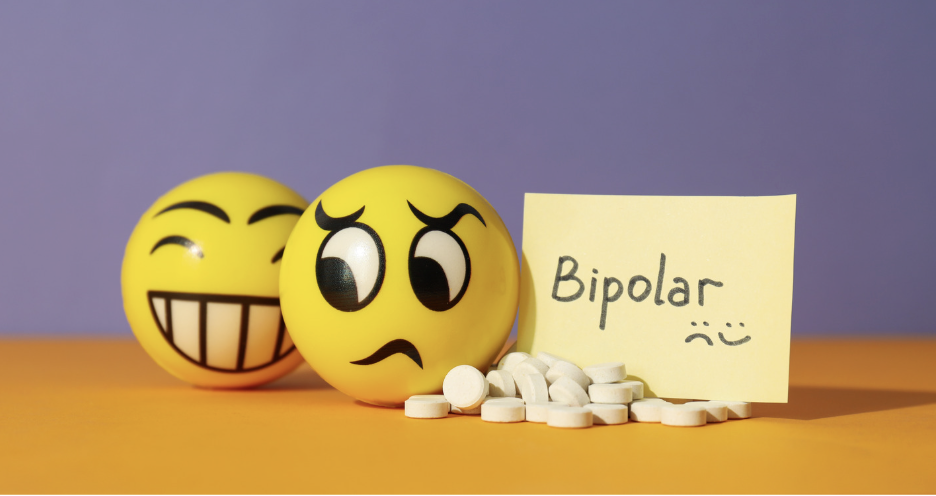
Feeling good is not mania. Being productive is not hypomania. Having more energy after something exciting happens is a normal emotional response.
Normal happiness might sound like, “I feel energized because something really good happened.” Mania or hypomania tends to look more like, “I have barely slept for several nights, I feel unstoppable, I am starting multiple major projects, talking much faster than usual, spending impulsively, and the people around me are telling me I seem completely different.”
The distinction is not simply whether someone feels positive or energetic. It is whether there is a sustained and significant change in mood, energy, sleep, behavior, judgment, and overall functioning.
Trauma Can Make Emotions Feel Intense and Unpredictable
Trauma can make emotional changes feel sudden, powerful, and confusing. A nervous system shaped by trauma may become especially sensitive to signs of possible danger, even when the current situation is relatively safe. Something as small as a change in someone’s tone of voice, a facial expression, a delayed text message, an argument, or the feeling of being ignored can activate a much larger emotional response.
You may go from feeling calm to suddenly feeling panicked, angry, ashamed, or completely shut down. These changes can happen quickly because the nervous system is responding to something it interprets as threatening. Trauma-related emotional shifts are often connected to triggers, memories, relationship dynamics, or feelings of rejection or vulnerability.
This is different from mania. Rather than experiencing a sustained mood episode involving significant changes in sleep, energy, activity, and behavior, someone with trauma may move rapidly between states of activation and shutdown depending on what is happening around them or inside their body.
ADHD Can Look Like Mood Swings
ADHD is commonly associated with attention, impulsivity, and hyperactivity, but emotional regulation can also be challenging for many people with ADHD. Someone may become frustrated very quickly, experience intense excitement, react strongly to rejection or criticism, or have difficulty calming down once an emotion takes over.
These emotional shifts can happen quickly. You might feel excited and motivated about a new project, become overwhelmed when it gets difficult, and then suddenly feel irritated, discouraged, or ready to abandon it altogether. Boredom, overstimulation, too many demands, and difficulty shifting attention can also influence mood.
From the outside, this may look like unpredictable “mood swings.” Often, however, the underlying pattern is more closely connected to emotional regulation, frustration tolerance, executive functioning, impulsivity, and stimulation than to a sustained mood episode.
Anxiety Can Mimic Emotional Highs and Lows
Anxiety can also create dramatic changes in how someone feels and behaves. During periods of intense anxiety, you may become restless, irritable, mentally sped up, extremely focused on solving a problem, or physically unable to relax. Your thoughts may race, your body may feel energized, and you may find yourself talking or moving more quickly than usual.
Then, once that anxiety settles, the exhaustion can hit. You may suddenly feel drained, emotionally flat, unmotivated, or even depressed. The contrast between those two states can look like an emotional “high” followed by a “low.”
But anxiety-driven activation is different from mania. Anxiety is usually rooted in fear, worry, tension, or a sense of threat, while mania or hypomania involves a broader and more sustained change in mood, energy, sleep, judgment, and behavior.
Irritability Can Be a Symptom of Depression
Depression does not always look like obvious sadness. For some people, especially teenagers and some adults, depression may show up more strongly as irritability, impatience, withdrawal, emotional numbness, or feeling overwhelmed by things that would normally seem manageable.
When your emotional and physical energy is already depleted, even small frustrations can feel enormous. Noise becomes harder to tolerate. Everyday demands feel exhausting. You may snap at people you care about and then feel guilty afterward, wondering, “Why am I so angry all the time? I don’t even feel sad.”
Depression can reduce your emotional bandwidth. When your brain and body are already working with limited energy, there is simply less capacity available for frustration, stress, and everyday demands. Sometimes what looks like anger on the surface is actually exhaustion, hopelessness, or emotional pain underneath.
Treatment Depends on Understanding the “Why”
This is why accurate assessment matters. Two people can both say, “My moods are all over the place,” and be describing very different experiences. One person may be dealing with trauma-related emotional dysregulation. Another may have ADHD, anxiety, depression, bipolar disorder, or a combination of several factors.
Because the causes can be so different, the treatment plan should be different too. A thoughtful assessment looks at the full pattern rather than one symptom in isolation. That may include how long mood changes last, whether they are triggered by specific situations, what happens with sleep and energy, whether impulsivity increases, and whether there is a history of trauma, attention difficulties, anxiety, depression, substance use, medical concerns, medication changes, or a family history of mood disorders.
The goal is not to force your experience into the first diagnosis that sounds familiar. It is to understand what is actually driving the changes so treatment can match the problem. The more clearly the pattern is understood, the more targeted and helpful the support can be.
How Prospering Minds Counseling Can Help You
At Prospering Minds Counseling, we work with children, teens, and adults who experience intense emotions, irritability, mood changes, anxiety, trauma responses, ADHD-related emotional dysregulation, depression, and other concerns.
Therapy can help you:
Identify patterns in your mood changes
Understand possible triggers
Improve emotional regulation
Differentiate between trauma responses and other mood symptoms
Explore ADHD, anxiety, or depression-related patterns
Build distress-tolerance skills
Improve communication in relationships
Reduce shame around intense emotions
Develop coping strategies that match the underlying cause
Determine when psychiatric or medical evaluation may be appropriate
Therapy is not about assuming every intense emotion is a diagnosis.
It is about understanding what your nervous system, thoughts, behaviors, and experiences are telling you.
To learn more or schedule an appointment with Prospering Minds Counseling, call 708-680-7486 or email intake@prosperingmc.com.
Intense mood changes deserve attention.
But they also deserve careful understanding.
The goal is not just to name what is happening.
It is to understand why—so treatment can actually help.
