
Why Does Everyone Have a Fidget Toy Now?
Carly Wolfram, Licensed Clinical Professional Counselor (LCPC), Doctoral CandidateThis article explains why fidgeting is a normal form of self-regulation and how fidget toys may support attention, anxiety management, sensory needs, and restlessness. The article explores why people with ADHD, autism, and other forms of neurodivergence often use fidgets, what makes a fidget effective, and how quiet fidgets can be used in school, work, and public settings. Prospering Minds Counseling in Carol Stream, Illinois provides neurodiversity-affirming, trauma-informed therapy for children, teens, and adults navigating ADHD, anxiety, sensory differences, emotional regulation, and executive functioning.

Walk into a classroom, therapy office, workplace, or even a coffee shop, and you may notice someone holding a spinner, textured ring, fidget cube, keychain, piece of putty, or a Needoh. Fidget toys seem to be everywhere, and while they can certainly be fun, they often serve a much more practical purpose.
Fidgeting can help some people manage attention, restlessness, anxiety, sensory needs, or excess energy. What looks distracting from the outside may actually be helping someone stay more focused and present. The goal is not always to make the body perfectly still. For some brains, a small amount of movement can make it easier to concentrate.
What Is a Fidget Toy, Really?
A fidget toy is simply a small object that gives the hands something repetitive, tactile, or sensory to do. Some are designed specifically for fidgeting, while others are ordinary objects that happen to serve the same purpose.
This might include putty, stress balls, textured rings, pop toys, beaded bracelets, clickers, magnetic pieces, tangles, or sensory keychains. The specific object matters less than what it helps the person do.
A fidget gives the body a small outlet for movement or sensory input while the person is listening, working, reading, thinking, or trying to regulate. For some people, that extra movement is not a distraction at all. It is part of how they focus.
Why Do People Fidget in the First Place?
Fidgeting is a normal human behavior. People tap their feet, bounce their legs, twirl pens, doodle, shift in their seats, pick at their nails, or play with jewelry all the time. Often, the body is trying to regulate something—restlessness, boredom, anxiety, excess energy, sensory input, emotional tension, or the effort it takes to stay focused.
The body does not always regulate through stillness. For some people, movement actually helps them stay engaged. That can be a helpful shift in perspective. Instead of asking, “Why can’t you sit still?” it may be more useful to ask, “Does moving help you focus or stay present?”
Why People With ADHD or Other Neurodivergence May Use Fidgets
Many people with ADHD or other forms of neurodivergence find that a small amount of movement helps support attention. Repetitive or low-stimulation tasks can be especially difficult to stay engaged with, and a fidget may provide just enough sensory input to help the brain remain focused.
Fidgets can also support listening, waiting, impulse control, sensory regulation, and task completion. Autistic individuals may use them as part of stimming, which refers to repetitive movements or behaviors that can help regulate sensory input, emotions, or energy. Stimming might include rocking, pacing, hand movements, rubbing textures, or manipulating objects.
The goal is not to eliminate movement. It is to help someone regulate in a way that is safe, effective, and supportive of what they are trying to do.
How Fidgets Can Help With Anxiety and Restlessness
Anxiety often shows up in the body. You may notice tight muscles, shaky hands, tapping, picking, restlessness, or a strong urge to move. For some people, a fidget gives that physical energy somewhere to go.
Repetitive tactile input can also feel grounding. Squeezing putty, rubbing a textured ring, or moving a small object in the hand may help bring attention back to the present moment instead of getting pulled further into racing thoughts.
For some people, fidgets can also provide an alternative to habits like nail biting or skin picking, although they are not a complete treatment for those behaviors. Fidget toys do not eliminate anxiety or restlessness, but they can become one useful tool within a larger coping and regulation system.
What Makes a Good Fidget Toy?

The best fidget is the one that helps without becoming more distracting than the task itself. A useful fidget should generally be easy to use, comfortable, durable, safe, and appropriate for the environment. It should provide enough sensory input to be helpful without demanding so much attention that it pulls focus away from school, work, conversation, or whatever else you are trying to do.
Different people need different kinds of sensory input. Some prefer resistance, such as putty or a stress ball. Others like movement, spinning, rubbing textures, or clicking. What feels calming and helpful to one person may be irritating or distracting to someone else. There is no single “best” fidget—the right choice depends on the person, the setting, and what kind of regulation they need.
Quiet Fidgets for School, Work, and Public Spaces
In shared environments, noise and visibility matter. A fidget that works perfectly at home may be too distracting in a classroom, meeting, or waiting room. Quieter options such as therapy putty, silicone rings, textured bracelets, silent fidget cubes, smooth stones, small fabric textures, tangles, elastic finger bands, or discreet spinner rings may work better in those settings.
For children, it can help to be clear about the purpose of the tool. A parent or teacher might say, “This is here to help your body focus. If it starts distracting you or other people, we may need to try a different option.” That keeps the boundary clear without shaming the child for needing movement or sensory input.
Fidgets Are Not Just for Kids
Adults fidget too—many just do not call it that. You may see adults doodling in meetings, twisting a ring, bouncing a knee, holding a coffee cup, playing with a paperclip, squeezing a Needoh, or clicking a pen during a long phone call.
A formal fidget tool simply makes that regulation more intentional. Adults with ADHD, autism, anxiety, trauma histories, or high-stress jobs may find that a small sensory object helps them stay focused, grounded, or physically calmer.
There is nothing childish about using a tool that helps your nervous system work more effectively. If a fidget helps you stay present without interfering with the task, it is doing exactly what it is supposed to do.
The Goal Is Regulation, Not Looking Still
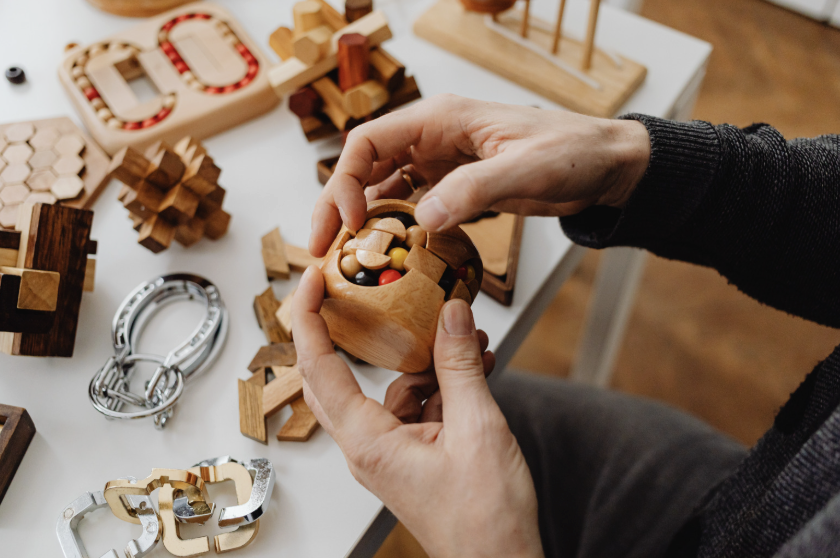
For a long time, stillness was treated as proof of attention. Children were often expected to sit quietly, keep their hands still, and make eye contact to show that they were listening. But regulation does not look the same for everyone.
Some people focus better when they are moving. Some listen more closely while doodling. Others think more clearly when their hands are occupied. The better question is not, “How do we make this person look still?” but rather, “What helps this person stay regulated, engaged, and available for learning?”
That shift matters. A child squeezing a fidget may actually be listening more closely than a child who appears perfectly still. An adult twisting a ring may be managing enough anxiety to stay present in a difficult conversation. Movement is not always a sign of distraction.
Sometimes, movement is part of the regulation that makes attention possible.
How Prospering Minds Counseling Can Help You
At Prospering Minds Counseling, we work with children, teens, and adults who experience ADHD, autism, anxiety, sensory differences, restlessness, emotional regulation challenges, and trauma-related nervous system responses.
Therapy can help you better understand what your body is trying to communicate and develop practical strategies that support regulation.
We can help you:
Identify sensory needs
Build emotional regulation skills
Understand ADHD-related restlessness
Explore helpful fidget and sensory strategies
Reduce anxiety
Develop grounding skills
Improve attention and task completion
Build coping tools for school, work, and home
Reduce shame around movement and self-regulation
Create supports that fit your individual nervous system
The goal is not to make everyone regulate the same way.
It is to help each person understand what actually helps them function well.
To learn more or schedule an appointment with Prospering Minds Counseling, call 708-680-7486 or email intake@prosperingmc.com.
You do not have to look perfectly still to be focused.
Sometimes, your hands are helping your brain stay present.
