
When Spending Becomes a Coping Skill
Carly Wolfram, Licensed Clinical Professional Counselor (LCPC), Doctoral CandidateOverspending is not always about poor money management. Sometimes spending becomes a coping skill used to manage stress, anxiety, trauma, ADHD, depression, loneliness, or emotional overwhelm. This article explores the emotional side of spending, why shame keeps the cycle going, and how therapy can help individuals in Carol Stream, IL build healthier coping strategies and a more balanced relationship with money.

Overspending is often judged harshly.
People may call it irresponsible, impulsive, careless, selfish, or self-sabotaging. You may say these things to yourself, too. Perhaps you look at a receipt, a credit card statement, or another package on your doorstep and feel a wave of guilt before you have fully understood what happened.
You might think:
“Why did I do that again?”
“I know better.”
“I have no self-control.”
“I’m ruining everything.”
But spending is not always about wanting more things. Sometimes, it becomes a way to soothe emotional pain, escape an uncomfortable moment, regain a sense of control, or briefly feel hopeful about the future.
Understanding what spending is doing for you does not excuse harmful financial consequences. It does, however, give you a more useful starting point for change.
Emotional Spending and Nervous System Relief
Shopping can provide a temporary shift in how you feel.
Searching for an item, comparing choices, imagining a new version of your life, and waiting for a purchase to arrive can create anticipation and relief. During periods of loneliness, stress, boredom, grief, anger, anxiety, or emotional numbness, shopping may offer something concrete to focus on.
For a brief moment, the nervous system may experience:
Distraction from painful thoughts
Relief from emotional overwhelm
A sense of control or choice
Excitement and stimulation
Comfort or self-reward
Hope that something is about to improve
The item itself may not be the true goal. The goal may be the emotional experience connected to buying it.
This is why simply creating a stricter budget does not always stop emotional spending. A budget may address the financial behavior, but it does not automatically address the distress that the behavior has been regulating.
When spending becomes a coping skill, asking “How do I stop buying things?” may not be enough. A deeper question is:
“What feeling, need, or internal state am I trying to change when I spend?”
The Difference Between Impulsivity and Self-Sabotage
People often describe overspending as self-sabotage. However, that label can miss what is actually happening.
Self-sabotage suggests that some part of you intentionally wants to destroy your progress. In many cases, the opposite is true. The spending behavior is attempting to help you feel better, even though its long-term effects may create additional stress.
Impulsive spending can happen when there is little space between an urge and an action. You see something, experience a strong desire or emotional shift, and purchase it before fully considering the consequences.
Compulsive spending may feel different. It can involve repetitive urges, preoccupation with shopping, difficulty resisting purchases, secrecy, financial consequences, and continued behavior despite guilt or relationship problems.
“Shopping addiction” is not currently recognized as its own formal diagnosis or as a behavioral addiction in the Diagnostic and Statistical Manual of Mental Disorders—the DSM-5-TR. Gambling disorder remains the only behavioral addiction formally classified in the DSM-5-TR, although researchers continue to study compulsive buying-shopping disorder as a possible behavioral addiction and clinical condition. (American Psychiatric Association)
A person can still experience significant distress and impairment from compulsive shopping even when the behavior does not have a specific DSM diagnosis. The absence of a formal label does not make the struggle less real.
ADHD, Trauma, and Spending Patterns
Spending patterns do not occur in a vacuum. They may be influenced by attention, emotional regulation, past experiences, and the environment around you.
For someone with ADHD, spending may be connected to novelty seeking, difficulty delaying gratification, time blindness, inconsistent awareness of account balances, or acting before there is enough time to consider long-term consequences. Shopping may also provide stimulation when a person feels bored, restless, depleted, or under-engaged.
Trauma can affect spending in different ways.
Someone who grew up without reliable access to necessities may feel intense urgency when an item is available. A person who experienced financial control in a past relationship may use spending to reclaim autonomy. Someone who was frequently deprived, neglected, criticized, or made to feel undeserving may use purchases to provide themselves with comfort they did not receive from others.
Spending may also become connected to identity. Buying clothing, home décor, hobbies, beauty products, technology, or supplies may support the fantasy of becoming more organized, confident, successful, creative, secure, or lovable.
This does not mean everyone who overspends has ADHD or a trauma history. It means that meaningful change often requires looking beyond willpower and examining the context surrounding the behavior.
## Shame After Spending
The relief associated with shopping is often temporary.
Once the purchase is complete, anticipation may fade and shame may take its place. You may feel anxious about your bank account, hide purchases from a partner, avoid opening bills, return items repeatedly, or promise yourself that it will never happen again.
The cycle may look like this:
Emotional discomfort → urge to shop → temporary relief → financial or relational consequences → shame → increased emotional discomfort → renewed urge to shop
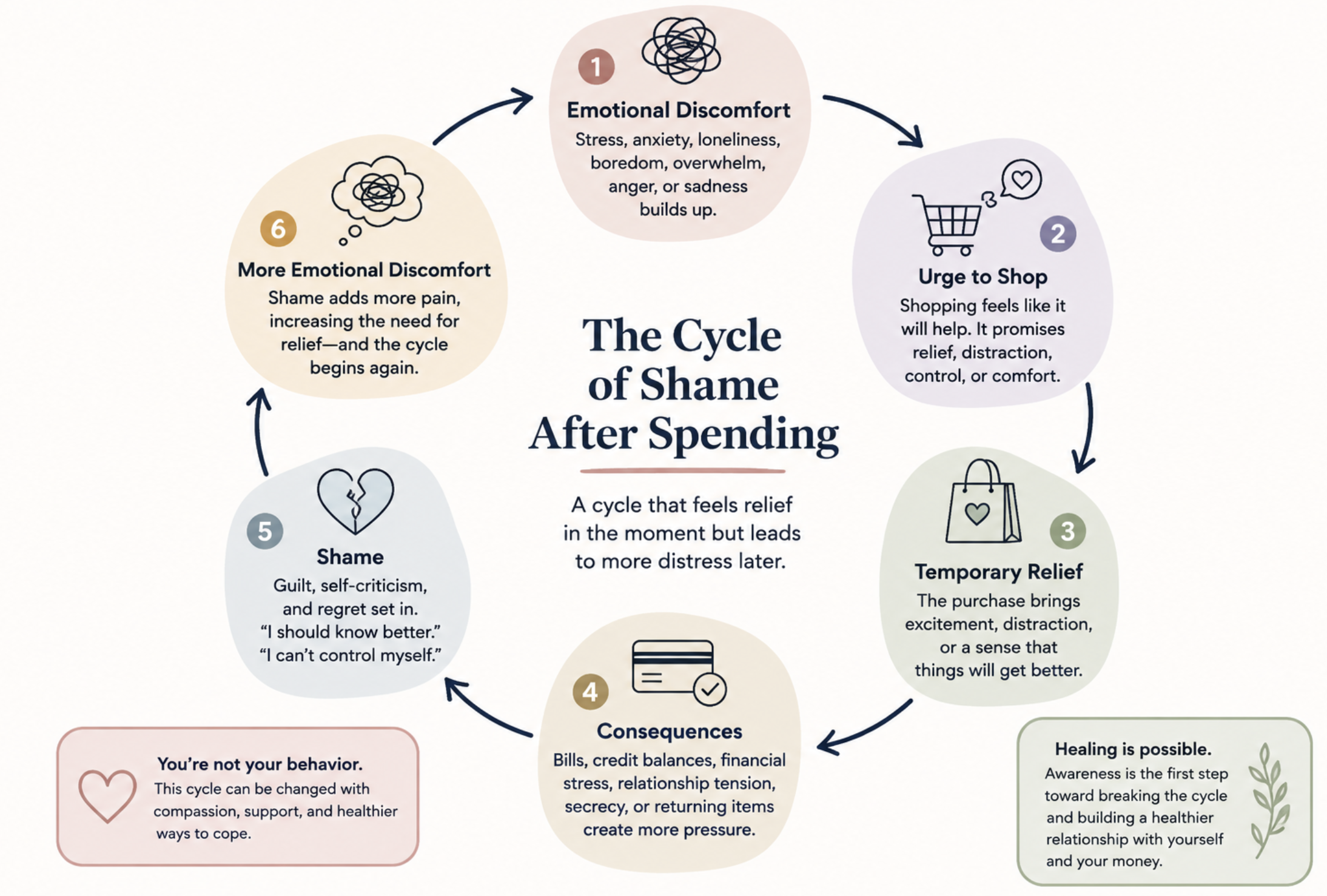
Shame can make this cycle stronger.
When you tell yourself that you are irresponsible, selfish, or broken, you create more emotional pain. If shopping is already one of your main strategies for escaping pain, that shame may eventually trigger another purchase.
Accountability remains important. You may need to return items, reduce access to credit, make a repayment plan, discuss finances honestly, or set clearer limits. But accountability and shame are not the same thing.
Accountability says, “This behavior is causing harm, and I need to address it.”
Shame says, “I am the problem, and I cannot be trusted.”
One supports change. The other often keeps the cycle hidden.
Building Safer Coping Options Without Using Shame
The goal is not necessarily to eliminate every nonessential purchase. Shopping can be practical, enjoyable, creative, and socially meaningful. The goal is to increase your ability to choose rather than feeling controlled by an urge.
Start by becoming curious about the moments that surround spending.
Before making a purchase, wewant to put space between you and your impulse! Pause and ask yourself:
What am I feeling right now?
What happened shortly before I wanted to shop?
What am I hoping this purchase will help me feel?
Am I seeking comfort, stimulation, control, identity, connection, or relief?
Will this purchase still feel important after the emotional intensity passes?
A pause does not need to become a punishment. You might place an item on a wish list, leave it in your cart for 24 hours, take a screenshot, or write down what you wanted to purchase and why.
You can also create coping options that meet the same emotional need more safely.
When you need stimulation, you might listen to music, change environments, complete a brief physical activity, start a creative project, or connect with someone.
When you need comfort, you might use a weighted blanket, take a warm shower, prepare a favorite drink, watch something familiar, or practice grounding.
When you need control, you might organize one small area, make a short plan, choose between two manageable activities, or review your finances without criticizing yourself.
When you need hope, you might create a realistic goal, plan an experience, revisit something meaningful, or identify one action that supports the life you are imagining.
Practical barriers can help as well. Consider removing stored payment information, unsubscribing from promotional messages, limiting buy-now-pay-later services, creating a separate discretionary spending account, or asking a trusted person to help you review larger purchases.
These tools work best when they are used as protection rather than punishment.
You Deserve Support, Not Shame
Struggling with spending does not mean you are shallow, careless, or incapable of change.
It may mean that your brain and nervous system found an accessible way to create relief. The strategy may now be causing harm, but it probably developed for a reason.
You can acknowledge the consequences without attacking yourself. You can repair financial damage while remaining curious about your emotional needs. You can build structure without treating yourself like someone who deserves to be controlled.
Change often begins when the question shifts from:
“What is wrong with me?”
to:
“What has this behavior been helping me survive, avoid, express, or regulate—and what could help me more safely now?”
How Prospering Minds Counseling Can Help
At Prospering Minds Counseling, our therapists can help you explore the emotional experiences, attention patterns, trauma responses, relationship dynamics, and beliefs that may be contributing to problematic spending.
Therapy may help you:
Identify emotional and situational spending triggers
Understand patterns related to ADHD, anxiety, trauma, grief, or depression
Develop nervous system regulation and distress-tolerance skills
Reduce shame and secrecy surrounding money
Strengthen communication about finances and spending
Create coping strategies that address the underlying emotional need
Build a more compassionate and sustainable relationship with yourself
You do not have to wait until your finances, relationships, or emotional health reach a crisis point. Support is available even when you are still trying to understand the pattern.
To learn more or schedule an appointment with Prospering Minds Counseling, call 708-680-7486 or email intake@prosperingmc.com.
You deserve support that looks beneath the behavior—not judgment that leaves you feeling more alone.
