
Trauma Bonds: Why It Can Feel So Hard to Walk Away
Carly Wolfram, Licensed Clinical Professional Counselor (LCPC), Doctoral CandidateThis article explains why leaving an abusive or emotionally manipulative relationship is often much more complicated than simply deciding to leave. The article explores how trauma bonds develop through cycles of abuse, hope, and reconciliation, how intermittent reinforcement affects the brain, and the differences between trauma bonds and healthy attachment. Readers will also learn how trauma bonds can occur in romantic relationships, families, friendships, and workplaces, as well as practical first steps toward healing and rebuilding a sense of safety. Prospering Minds Counseling provides trauma-informed therapy for survivors of abuse, attachment trauma, relationship difficulties, anxiety, PTSD, and complex trauma.

One of the most painful and misunderstood questions survivors of abusive relationships often hear is, “Why didn’t you just leave?” While that question is usually asked with good intentions, it overlooks the complex psychological and emotional reality of abuse. From the outside, leaving may seem like the obvious choice. But when you’re living inside the relationship, the situation is often far more complicated than it appears.
Many survivors describe feeling confused by their own reactions. They know they’re being hurt, yet they still miss the person when they’re apart. They may leave multiple times, only to return feeling ashamed, frustrated, or wondering why they couldn’t stay away. Some begin questioning their own judgment or believing they are somehow weak because they continue loving someone who has caused them pain.
The truth is, this isn’t a sign of weakness. It is often the result of how repeated abuse affects the brain, the nervous system, and our natural need for attachment and connection. One way this experience is understood is through the concept of a trauma bond—a powerful emotional attachment that can develop within abusive or coercive relationships through repeated cycles of fear, harm, and control followed by periods of affection, remorse, relief, or promises to change.
Understanding trauma bonds is not about making excuses for abusive behavior. It’s about helping survivors understand why leaving can feel so incredibly difficult. When people recognize the psychological processes involved, shame often begins to give way to compassion, clarity, and hope.
What Is a Trauma Bond?
A trauma bond is a strong emotional attachment that develops between a person experiencing abuse and the person causing that harm. It forms through repeated cycles of mistreatment followed by moments of kindness, affection, apologies, or temporary change. These periods of warmth create hope that the relationship is improving, making it increasingly difficult to leave despite ongoing harm.
It’s important to clarify that a trauma bond is not the same as two people bonding over a shared traumatic experience. The term specifically refers to an attachment that develops within an abusive or coercive relationship, where periods of fear and emotional pain become intertwined with moments of comfort and relief.
Many abusive relationships follow a repeating pattern that can look something like this:
A period of love, affection, or idealization
Growing tension, criticism, or emotional distance
Emotional, physical, sexual, financial, or psychological abuse
Apologies, gifts, affection, or promises that things will change
A temporary period of calm or closeness
The cycle begins again
Over time, this cycle changes how the brain responds. The same person who causes fear and emotional pain also becomes the person who temporarily relieves that pain through affection, reassurance, or apologies. As a result, the brain begins associating that relief with safety, even though the relationship itself remains unsafe.
This creates an incredibly confusing emotional experience. Survivors often find themselves thinking:
“I know they hurt me… but I also know how loving they can be.”
“Maybe this time they really mean it.”
“If we could just get back to how things were in the beginning…”
These thoughts don’t mean someone is irrational or choosing abuse. They reflect the powerful emotional conflict that develops when love, fear, hope, and pain become repeatedly intertwined. Understanding that conflict is one of the first steps toward understanding why trauma bonds can feel so incredibly difficult to break.
Why Leaving Isn’t as Simple as “Just Walk Away”
One of the biggest misconceptions about abusive relationships is the belief that once someone recognizes they’re being mistreated, leaving should be easy. If that were true, many abusive relationships would end after the very first incident. Instead, leaving is often one of the most difficult and dangerous parts of the relationship. That’s because abuse affects far more than someone’s thoughts—it influences their emotions, nervous system, sense of safety, and the practical realities of everyday life.
Many survivors remain in abusive relationships for reasons that have nothing to do with weakness or a lack of intelligence. They may fear retaliation if they leave, rely on their partner financially, share children together, or have become isolated from supportive friends and family. Others feel pressure from cultural or religious beliefs, struggle with shame, or continue hoping the relationship can return to the loving version they experienced in the beginning. Many survivors also genuinely love their partner and can clearly remember the kind, caring person they believed they knew. These realities often exist all at once, making the decision to leave incredibly complex.
Trauma bonds make this even more difficult. After periods of fear, criticism, or abuse, even small moments of affection or kindness can feel incredibly meaningful because they provide temporary relief. The brain naturally seeks relief from distress, and over time the nervous system can begin associating that relief with the very person causing the pain. This doesn’t mean the relationship is healthy—it means the brain has adapted to survive within an unsafe environment.
Leaving an abusive relationship often involves grieving two losses at the same time: the relationship that actually existed and the relationship you hoped it could become. Many survivors aren’t only saying goodbye to a partner—they’re saying goodbye to the future they imagined, the promises that were made, and the hope that things would eventually be different. That grief is real, and it deserves compassion.
The Cycle of Abuse, Hope, and Reconciliation
One reason trauma bonds become so powerful is that most abusive relationships are not abusive all of the time. If they were, recognizing the danger would often be much more straightforward. Instead, many abusive relationships move through a repeating cycle that includes periods of growing tension, episodes of abuse or harm, reconciliation, and temporary calm. During those calmer moments, it can genuinely feel like things are finally getting better.
After an abusive incident, a partner may apologize, cry, express remorse, buy gifts, become especially affectionate, promise to start therapy, or insist, “I’ll never do it again.” Sometimes these moments feel incredibly sincere, and in some cases, the person truly believes they want to change. Hope begins to grow again, and the survivor naturally wants to believe that the relationship can return to the loving connection they experienced in the beginning.
The challenge is that lasting change requires much more than apologies or promises. It requires accountability, consistent behavior over time, and a genuine commitment to ending abusive patterns. Without meaningful and sustained change, the cycle often repeats, with another period of tension eventually leading to another episode of harm.
Over time, hope itself becomes part of the trauma bond. The survivor is no longer waiting only for love—they’re waiting for the return of the person they first fell in love with. They hold on to the moments of kindness, believing those moments represent the relationship’s true potential. Understanding this dynamic can help explain why leaving is so much more complicated than simply recognizing that abuse has occurred.
Your Brain Can Become Attached to the Relief, Not Just the Person
One of the strongest psychological mechanisms involved in trauma bonding is intermittent reinforcement.
This means rewards happen unpredictably.
The brain never knows when affection, kindness, or safety will return.
Research has long demonstrated that intermittent reinforcement creates exceptionally persistent behavior—it’s the same learning principle used in gambling, where unpredictable rewards keep people coming back. Trauma bonds operate through a similar cycle of uncertainty and relief. (Psychology Today)
After periods of fear or emotional pain, even small moments of kindness may feel incredibly powerful.
Your brain begins anticipating those moments.
Eventually, you may find yourself craving the relief more than the relationship itself.
This is one reason survivors often describe the relationship as feeling “addictive.”
They’re not addicted to abuse.
They’re attached to the brief moments of safety that interrupt it.
The Difference Between a Trauma Bond and a Healthy Attachment
Many people worry:
“What if this is just what love feels like?”
Healthy attachment and trauma bonding can feel very different.
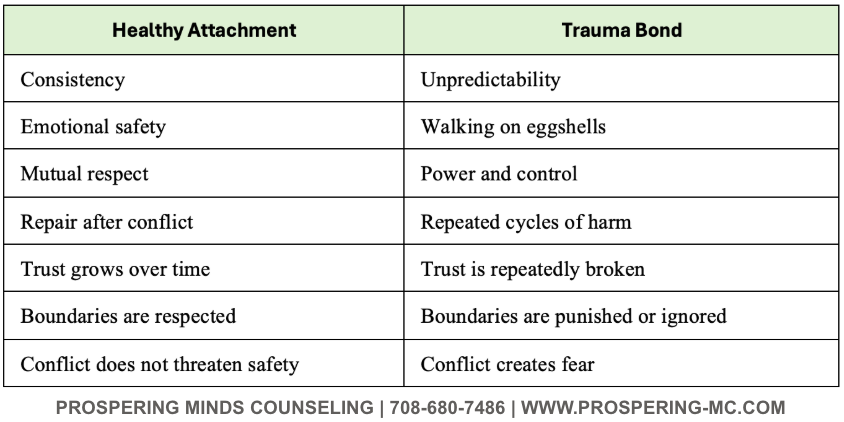
It’s important to remember that abusive relationships are unfortunately far more common than many people realize. Globally, an estimated 1 in 3 women experience physical and/or sexual intimate partner violence during their lifetime, highlighting just how widespread these relationship dynamics can be. This statistic doesn’t include the many people who also experience emotional, psychological, financial, or coercive abuse, all of which can have profound and lasting effects on mental health and well-being.
Trauma Bonds Can Happen in More Than Romantic Relationships
Although trauma bonds are most commonly discussed in the context of romantic relationships, they can develop anywhere there is an ongoing pattern of harm, manipulation, dependency, and intermittent kindness. Trauma bonds are not limited to dating or marriage—they can occur in many different types of relationships where there is a significant imbalance of power or control.
These relationships may include parents and children, adult children and caregivers, siblings, close friendships, religious or spiritual organizations, workplaces, coaches or mentors, human trafficking situations, cults, and other coercive groups. While each situation looks different, they often share a common pattern: periods of fear, criticism, manipulation, or mistreatment are followed by moments of warmth, approval, affection, or relief. Over time, that cycle can create a powerful emotional attachment that makes leaving or setting boundaries feel incredibly difficult.
Recognizing that trauma bonds can occur outside of romantic relationships is important because many people don’t realize that the confusion, guilt, loyalty, and emotional pull they feel may be the result of the same underlying psychological process. Understanding these patterns can be the first step toward recognizing that the relationship has become harmful and that support is available.
How to Begin Breaking a Trauma Bond Safely
Breaking a trauma bond is rarely a single moment of clarity. More often, it is a gradual process of recognizing unhealthy patterns, rebuilding trust in yourself, and creating safety one step at a time. If you are currently in an abusive relationship, your physical and emotional safety should always come first. In some situations, leaving suddenly may actually increase the level of danger. Developing a personalized safety plan with trusted loved ones, a domestic violence advocate, or another qualified professional can help reduce risk and provide support throughout the process.
Recovery often involves learning to name the abuse honestly, understanding how trauma bonds develop, reconnecting with supportive people, reducing isolation, working with a trauma-informed therapist, establishing healthier boundaries, documenting patterns of behavior to reduce self-doubt, and allowing yourself to grieve. Grief is a natural part of healing. Many survivors are mourning not only the relationship they experienced, but also the future they hoped was possible.
It’s also important to remember that missing the person after leaving does not necessarily mean you made the wrong decision. Missing someone is a normal response when your brain and nervous system have been conditioned through repeated cycles of attachment and harm. Healing often involves learning to tolerate the discomfort of that separation while your nervous system gradually adjusts to life outside of the cycle.
Learning What Safe, Healthy Relationships Feel Like

One of the surprising challenges of recovery is that healthy relationships may initially feel unfamiliar. Without the constant cycle of emotional highs and lows, they can even seem “boring” at first. This doesn’t mean healthy relationships lack love, passion, or connection. More often, it means your nervous system is becoming accustomed to something it has had very little experience with: consistency.
Healthy relationships are built on reliability rather than unpredictability. They include emotional safety, accountability, mutual respect, trust, honest communication, healthy boundaries, repair after conflict, and the freedom to be your authentic self without fear of punishment or manipulation. Disagreements still happen, but they don’t leave you questioning your worth or wondering whether the relationship will survive every conflict.
Over time, many survivors discover that what once felt unfamiliar begins to feel comforting. The absence of constant anxiety allows space for genuine intimacy, personal growth, and a deeper sense of peace. Recovery isn’t about finding a perfect relationship. It’s about learning that love doesn’t have to be earned through suffering, uncertainty, or survival. Healthy love may not create emotional fireworks every day—but it creates something far more lasting: safety, stability, and the freedom to grow.
Before I share this section, one important clarification: recovery does not always require leaving the relationship. Some people are recovering from relationships they have already left. Others may still be in abusive situations where leaving is not yet safe or possible. Recovery looks different for everyone.
Recovery Is About More Than Leaving—It’s About Reclaiming Yourself
Leaving an abusive relationship is often one of the most significant steps in the healing process, but it is rarely the end of the journey. For many survivors, recovery is about much more than physical distance from the person who caused harm. It’s about gradually reconnecting with the parts of yourself that may have been diminished, silenced, or lost along the way.
Abusive relationships often become so consuming that people begin to lose sight of who they were before the relationship. As healing begins, many survivors find themselves reclaiming pieces of their lives that had slowly disappeared—their confidence, their voice, their boundaries, their friendships, their hobbies, their dreams, and their sense of safety. They begin making decisions based on what they want rather than what will keep someone else happy or prevent the next conflict. This process takes time, patience, and tremendous courage.
Recovery is not about pretending the relationship never mattered or convincing yourself that you never loved the person. In fact, acknowledging that the relationship mattered deeply is often an essential part of healing. The love, hope, and grief were real. The dreams you had for the future were real. It makes sense that rebuilding after those losses takes time.
With support, many survivors notice a remarkable shift. The peace that once felt unfamiliar—or even boring—begins to feel comforting. They no longer mistake emotional chaos for passion or unpredictability for love. Instead, they begin protecting the very things that once felt strange: consistency, emotional safety, mutual respect, honesty, and healthy boundaries.
Healing doesn’t erase the past. It helps you build a future where you no longer have to survive love—you get to experience it as a source of safety, connection, and growth.
How Prospering Minds Counseling Can Help You
At Prospering Minds Counseling, we understand that leaving an abusive or emotionally manipulative relationship is often far more complicated than it appears from the outside. Trauma bonds affect the nervous system, attachment system, self-worth, and sense of identity—and healing requires compassion, not judgment.
Our trauma-informed therapists help clients understand relationship patterns while building the emotional safety needed to move forward.
Therapy may help you:
Understand trauma bonds and cycles of abuse
Process relationship trauma and betrayal
Rebuild self-worth and confidence
Reduce shame and self-blame
Strengthen healthy boundaries
Recognize manipulation and red flags earlier
Learn what secure attachment feels like
Process grief after leaving a harmful relationship
Improve emotional regulation
Develop a personalized safety and recovery plan
Recovery is not about asking, “Why did I stay?”
It is about asking,
“What do I need now to heal?”
You deserve relationships built on consistency, respect, emotional safety, and mutual care—not fear, confusion, and unpredictability.
To learn more or schedule an appointment with Prospering Minds Counseling, call 708-680-7486 or email intake@prosperingmc.com.
