
Avoidance, Trauma, and Why You Shut Down
Avoidance, Trauma, and the Window of Tolerance: Why You Shut Down (and How to Come Back)
Carly Wolfram, Licensed Clinical Professional Counselor (LCPC), Doctoral Candidate
Avoidance is a common trauma response that can keep you stuck in cycles of anxiety, shutdown, and emotional overwhelm. This article explains how avoidance connects to the window of tolerance, why trauma causes hyperarousal and hypoarousal, and how the nervous system influences behavior. Learn how to recognize avoidance patterns, expand your window of tolerance, and use trauma-informed therapy to build emotional regulation and resilience.
Maybe you’ve noticed it in small ways.
You avoid certain conversations.
You put off tasks that feel overwhelming.
You scroll, distract, or stay busy instead of sitting with a feeling.
Or sometimes, you just… shut down.
You tell yourself you’ll deal with it later.
But “later” keeps getting pushed further away.
If this sounds familiar, you’re not lazy or unmotivated. You may be experiencing avoidance as a trauma response—and your nervous system may be moving outside your window of tolerance.

What Is Avoidance in Trauma?
Avoidance is one of the most common trauma responses.
It happens when your brain and body try to protect you from something that feels overwhelming, unsafe, or emotionally intense. Instead of facing the feeling or situation, your system shifts away from it.
Avoidance can look like:
putting off difficult conversations
avoiding places, people, or memories
staying constantly busy to not feel
distracting with screens, food, or substances
emotionally shutting down
In trauma, avoidance isn’t about not caring.
It’s about your nervous system saying, “This feels like too much.”
What Is the Window of Tolerance?
The window of tolerance is a concept used in trauma therapy to describe the zone where you feel regulated and able to function.
When you’re inside your window of tolerance, you can:
think clearly
feel emotions without being overwhelmed
respond instead of react
stay present in your body
It’s where you feel relatively balanced.
But trauma can shrink this window.
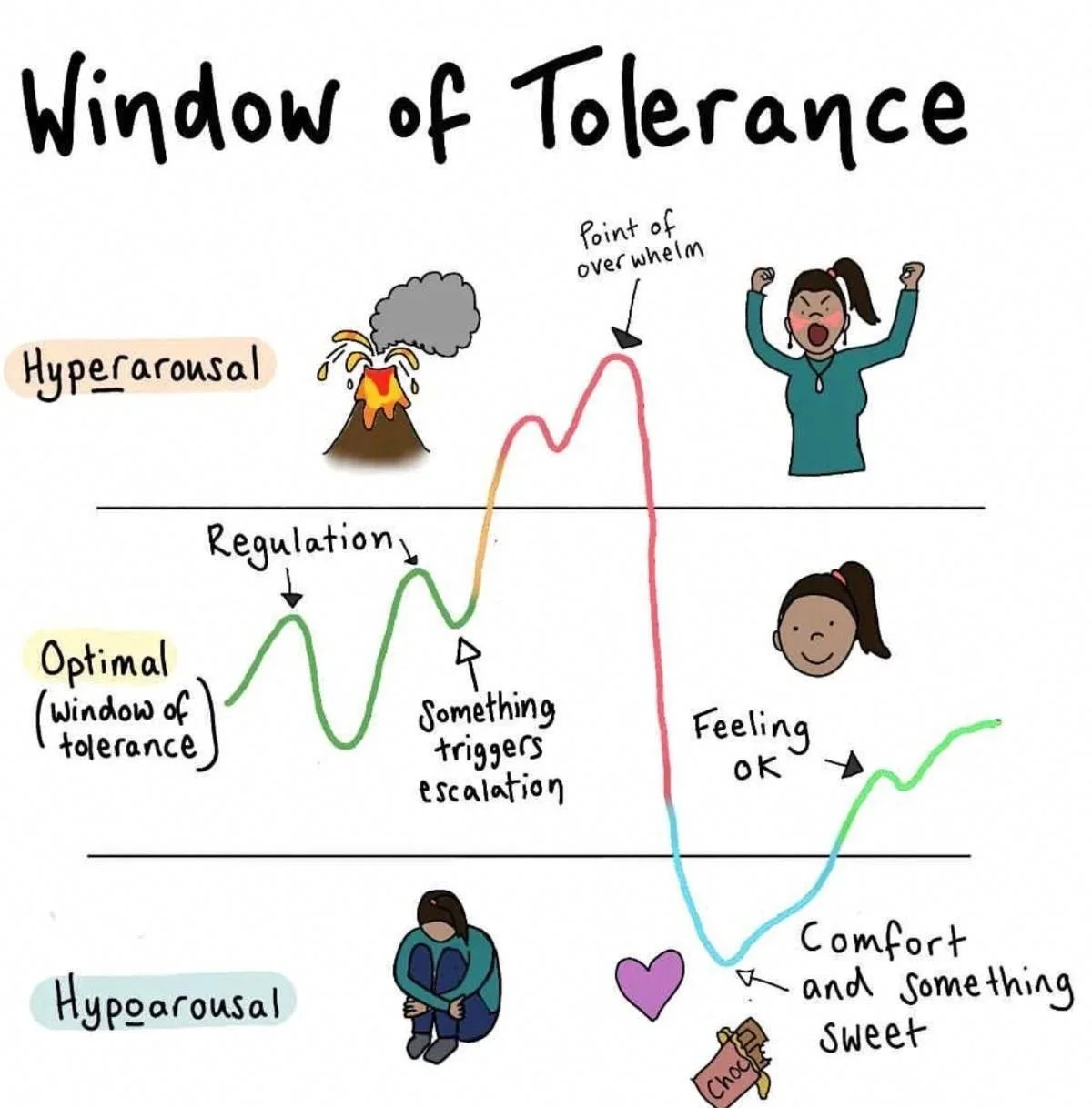
What Happens When You Leave Your Window of Tolerance?
When something feels too overwhelming, your nervous system moves outside of that window into one of two states:
Hyperarousal (Fight or Flight)
This can feel like:
anxiety
panic
racing thoughts
irritability
hypervigilance
Hypoarousal (Freeze or Shutdown)
This can feel like:
numbness
exhaustion
disconnection
brain fog
lack of motivation
Avoidance often happens in both states.
In hyperarousal, you avoid to escape anxiety.
In hypoarousal, you avoid because you feel shut down or unable to act.
Why Trauma Leads to Avoidance
Trauma teaches your nervous system that certain emotions, memories, or situations are dangerous.
Even if you’re safe now, your body may still respond as if the threat is present.
So your system learns:
Don’t go there.
Don’t feel that.
Don’t risk that happening again.
Avoidance becomes a way to stay safe.
And in the short term, it works.
It reduces distress. It creates relief. It helps you get through the moment.
But over time, avoidance can keep you stuck.
The Cycle of Avoidance and Trauma
Avoidance creates a cycle that can be hard to break.
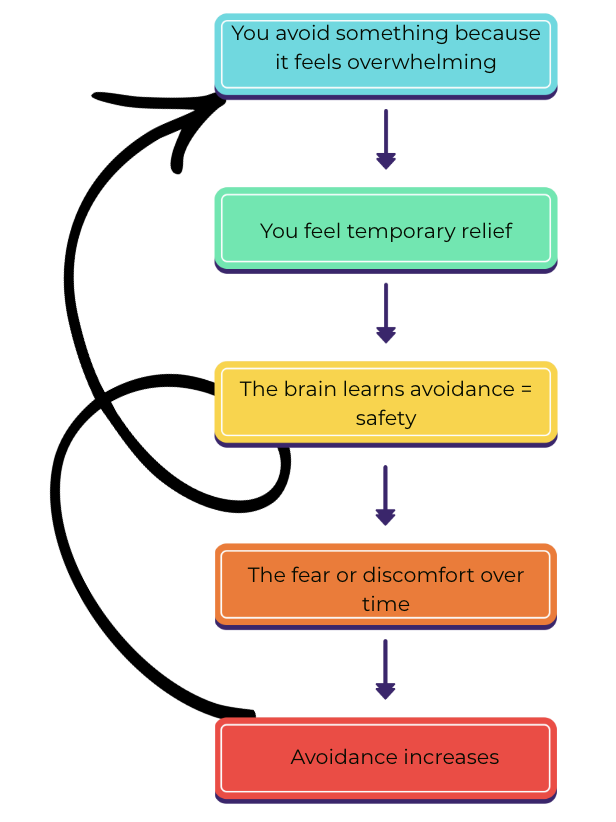
Eventually, even small things can start to feel overwhelming.
Your world can become smaller—not because you want it to, but because your nervous system is trying to protect you.
Why Avoidance Feels So Automatic
Avoidance often feels like a reflex, not a choice.
That’s because it’s happening in the nervous system, not just your thoughts.
If your system senses that something might push you outside your window of tolerance, it will try to prevent that from happening.
This is especially true if you’ve experienced:
chronic stress
relational trauma
emotional neglect
unpredictable environments
Your brain learned to prioritize safety over exposure.
How Do You Expand Your Window of Tolerance?
Healing is not about forcing yourself to “push through.”
It’s about gradually expanding your window of tolerance so that more experiences feel manageable.
This happens slowly and safely.
Start with Awareness
Notice when you’re avoiding something. Not with judgment—just curiosity.
Ask yourself:
What am I feeling right now?
Does this feel overwhelming or unsafe?
Regulate Before You Engage
If you’re outside your window, it’s not the time to force action.
Focus on grounding first:
slow breathing
feeling your feet on the ground
naming what you see around you
Take Small Steps
Instead of confronting everything at once, take manageable steps.
Avoidance decreases when your nervous system learns:
I can handle this.
Build Safety in the Body
Your window of tolerance expands when your body feels safe more often.
This might include:
movement
consistent routines
safe relationships
calming environments
Can You Stop Avoidance Completely?
Not entirely—and you don’t need to.
Avoidance is not the enemy. It’s a protective strategy.
The goal isn’t to eliminate it, but to:
understand it
respond to it differently
reduce how much it controls your life
Healing is about creating more flexibility, not perfection.
How Therapy Helps with Avoidance and Trauma
Trauma-informed therapy helps you work with your nervous system instead of against it.
In therapy, you can:
understand your avoidance patterns
identify your window of tolerance
learn grounding and regulation skills
process trauma safely
gradually re-engage with avoided experiences
Approaches like EMDR, Art Therapy, Brainspotting, somatic therapy, executive functioning skills and IFS can help expand your capacity to feel, process, and respond without becoming overwhelmed.
At Prospering Minds Counseling, we support individuals navigating trauma, avoidance, and nervous system dysregulation. Therapy can help you move out of survival mode and into a place where you feel more present, connected, and in control.
You’re Not Avoiding Because You’re Weak
You’re avoiding because your nervous system learned to protect you.
At some point, it worked.
Now, healing is about teaching your system that it’s safe to stay present—one small step at a time.
You don’t have to force yourself.
You don’t have to rush.
And you don’t have to do it alone.
