
Prospering Minds Counseling Blog
helping you prosper
The Prospering Minds Counseling Blog provides accessible, evidence-based mental health education to support individuals and families in understanding emotional wellness. We break down complex topics into practical insights that empower growth, resilience, and self-awareness. Our goal is to reduce stigma and offer trusted guidance as we continue helping you prosper.


Why Won’t My Teen Talk to Me Anymore?
Why won’t my teen talk to me anymore? Learn why teenagers naturally become more private, how stress, anxiety, depression, and overwhelm can affect communication, and what parents can do to stay connected. Prospering Minds Counseling in Carol Stream, Illinois supports teens and families with anxiety, depression, trauma, emotional regulation, neurodivergence, and family communication concerns.

Why Budgeting Advice Does Not Work for Everyone
Traditional budgeting advice does not work for everyone. For individuals living with ADHD, trauma, anxiety, depression, chronic stress, caregiving demands, or financial instability, budgeting can feel overwhelming rather than helpful. This article explores why budgeting often fails, how executive dysfunction and survival mode affect money management, and how you can build flexible financial systems that support long-term financial wellness without shame.

Medical Trauma and Chronic Illness
Chronic illness can affect more than the body. Learn how medical trauma, repeated dismissal, diagnosis uncertainty, pain, and fatigue can impact mental health, self-trust, and the nervous system.

Medical Gaslighting and Trauma: When Not Being Believed Becomes Part of the Wound
Medical gaslighting can leave lasting emotional wounds. Learn how repeated dismissal by healthcare providers can contribute to trauma, anxiety, self-doubt, and fear of medical care, and how trauma-informed therapy can help.

How to Build an Executive Functioning System That Survives Real Life
A sustainable executive functioning system is not about creating a perfect routine. It is about building flexible supports that can survive real life, including stress, grief, caregiving, neurodivergence, trauma responses, ADHD, anxiety, depression, burnout, and changing capacity. This article introduces a trauma-informed 5-part executive functioning system: regulate, reduce, externalize, simplify, and repair. It also explains how to choose one starting point, what to do when you fall off, and when to seek professional support.

From Shame-Based Productivity to Trauma-Informed Systems
Shame-based productivity often relies on pressure, punishment, comparison, rigid rules, and self-criticism. For trauma survivors and people with ADHD, anxiety, depression, burnout, or executive dysfunction, these systems can increase threat and make follow-through harder. This article introduces a trauma-informed executive functioning framework rooted in safety, flexibility, repair, choice, consent, support, and empowerment. It explains how shifting from “What’s wrong with me?” to “What support does my nervous system need?” can help create more sustainable planning, productivity, and self-trust.

Decision Fatigue, Trauma, and the Fear of Getting It Wrong
Decision fatigue can feel overwhelming for trauma survivors, people with anxiety, ADHD, depression, burnout, or executive functioning challenges. This article explains why decision-making can trigger threat responses when past experiences taught someone that mistakes lead to punishment, rejection, criticism, instability, or loss of control. It explores overthinking as an attempt to create safety and offers trauma-informed tools such as reducing decision load, creating defaults, using decision rules, sorting choices by stakes, limiting options, and trying safe-to-try experiments.

Why Planners Don’t Work When Your Nervous System Doesn’t Trust the Plan
Planners, productivity apps, calendars, and courses often fail when they do not account for trauma, ADHD, anxiety, depression, burnout, or nervous system overwhelm. This article explains why people abandon planning systems, how all-or-nothing planning creates shame, and why missing one day can lead to avoidance. It introduces trauma-informed planning strategies such as return plans, weekly reset rituals, low-capacity versions, flexible structure, and repair-based consistency.

Emotional Regulation Is an Executive Function Skill
Emotional regulation is a core executive functioning skill because planning, organizing, decision-making, memory, and follow-through become harder when the nervous system is flooded. This article explains how emotional overwhelm can interrupt working memory, increase decision paralysis, and make everyday tasks feel impossible. It explores signs of dysregulation such as irritability, shutdown, panic-cleaning, spiraling, and numbing, while offering trauma-informed tools like grounding, pacing, sensory supports, co-regulation, and compassionate self-talk.

Perfectionism Is Not High Standards — It’s Often Fear
Perfectionism is not always about high standards. For many high-achieving people, perfectionism is rooted in fear of criticism, rejection, failure, exposure, or losing control. This article explains perfectionism as a trauma adaptation and explores why perfectionists often procrastinate, over-prepare, avoid starting, or struggle to finish. It also explains the difference between healthy excellence and threat-driven performance, while offering “good enough” practices such as minimum viable tasks, draft mode, imperfect completion, and defining what good enough means before starting.

Executive Dysfunction or Self-Protection? Understanding Avoidance
Avoidance is not always laziness, irresponsibility, or lack of discipline. For trauma survivors and people with anxiety, ADHD, depression, chronic stress, or executive dysfunction, avoidance may be a form of self-protection from anticipated shame, failure, disappointment, conflict, criticism, or overwhelm. This article reframes avoidance as information, explores patterns like ghosting, over-researching, scrolling, cleaning, over-helping others, and perfectionistic delaying, and offers trauma-informed ways to reduce the threat level of tasks while still supporting accountability.

Time Blindness, Urgency, and the Trauma Clock
Time blindness, urgency, and deadline-driven stress can be connected to trauma, anxiety, ADHD, depression, and nervous system dysregulation. This article explains how trauma can distort time perception through now/not-now thinking, collapse, hypervigilance, and crisis-mode productivity. It also explores why shame-based alarms and rigid calendars often fail, and offers trauma-informed time supports such as visual time, transition buffers, compassionate reminders, flexible planning, and recovery time after stress.

The Freeze Response and Procrastination: Why You Can’t Start
Procrastination is not always laziness, avoidance, or poor time management. For trauma survivors and people experiencing chronic stress, anxiety, ADHD, or depression, difficulty starting a task may be connected to the nervous system’s freeze response. This article explains how small tasks like emails, bills, phone calls, decisions, deadlines, and conflict can feel overwhelming or unsafe. It also offers trauma-informed strategies such as body-first regulation, 2-minute entry points, and “safe enough” task design to help reduce shame and make starting feel more possible.

Toxic Positivity: Why Cautious Optimism Heals More Than “Just Stay Positive”
Toxic positivity can be a trauma response rooted in emotional suppression, people-pleasing, childhood emotional neglect, and nervous system survival patterns. This article explains why “just stay positive” can make anxiety worse, how cautious optimism supports healthier emotional healing, and how DBT Wise Mind helps balance emotions and logic for deeper trauma recovery.

High-Functioning Anxiety and Intellectualizing: When “Doing Fine” Is Actually a Trauma Response
High-functioning anxiety and intellectualizing are often misunderstood as personality traits, but they can be trauma responses rooted in childhood emotional neglect, perfectionism, chronic stress, and nervous system survival patterns. This article explains how overthinking, perfectionism, and emotional disconnection can develop as protective responses—and how trauma therapy and Brainspotting help create deeper healing beyond traditional talk therapy.

Brainspotting and Parts Work: When Your Inner Child, Protector, and Anxiety Need a Voice
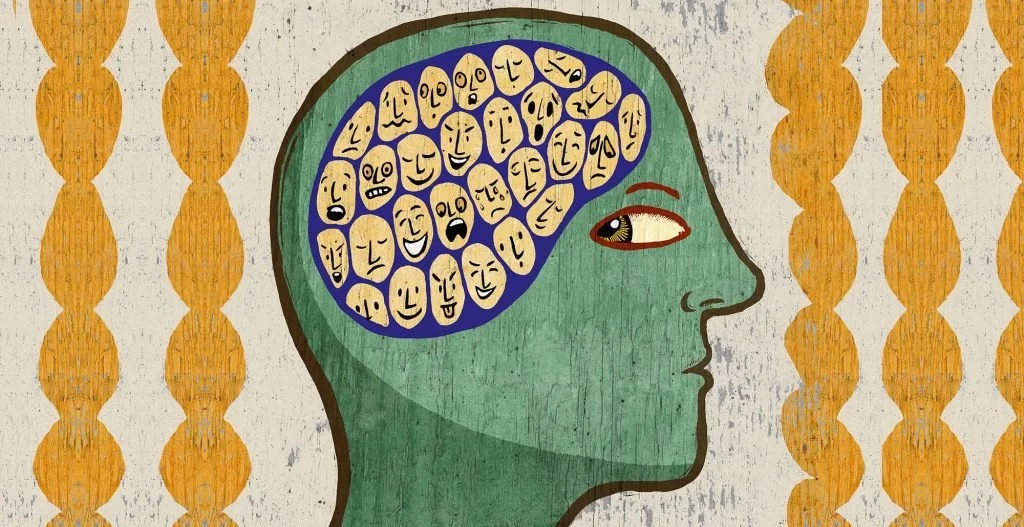
Brainspotting and parts work help clients understand the inner child, protector parts, anxiety, and firefighter responses that often develop through trauma, childhood wounds, and nervous system survival patterns. This article explains how Brainspotting supports healing by giving these protective parts a voice, helping clients move beyond perfectionism, people-pleasing, emotional shutdown, and anxiety into deeper emotional regulation and trauma recovery.
What Is Parts Spotting? A Gentle Brainspotting Approach for Trauma Healing
Parts Spotting is a gentle Brainspotting approach that helps people process trauma, anxiety, perfectionism, and emotional overwhelm by working with the different “parts” of themselves that hold fear, protection, and unresolved pain. This article explains how Parts Spotting supports trauma healing by helping protective parts feel seen, understood, and safe enough to heal—especially for those who feel stuck in traditional talk therapy.

Why You Keep Replaying the Same Dream: How Dreamspotting Helps You Process Trauma
Recurring dreams and nightmares are often connected to unresolved trauma, grief, anxiety, and nervous system activation. This article explains why you may keep replaying the same dream and how Dreamspotting in Brainspotting therapy helps process trauma memories, grief dreams, and emotional experiences that feel unfinished. Learn how Dreamspotting supports nervous system healing, improves sleep, and helps reduce recurring nightmares beyond traditional talk therapy.

Healing Nightmares with Dreamspotting and Brainspotting
Recurring dreams and nightmares are often connected to unresolved trauma, grief, anxiety, and nervous system activation. This article explains how Dreamspotting in Brainspotting therapy helps process trauma memories, grief dreams, and emotionally intense sleep disturbances by helping the brain and body reprocess what feels unfinished. Learn how Dreamspotting can reduce nightmares, improve sleep, and support deeper healing beyond traditional talk therapy.

Feeling Stuck in Therapy? Brainspotting May Help
Feeling stuck in therapy even after years of talking? Brainspotting is a powerful trauma-focused therapy that helps process emotional pain stored in the brain and nervous system when traditional talk therapy no longer feels enough. This article explains how Brainspotting works, why trauma lives in the body, and how this deeper approach can help with anxiety, PTSD, perfectionism, emotional shutdown, and feeling “stuck” in healing.
Reach Out Today!
Questions? Reach out today to schedule a consultation call. Someone from our team will reach out within 24 business hours. You may also reach out to our team by phone or email, listed below.
Phone: 708-680-7486
Email: intake@prosperingmc.com
Address:
640 E Saint Charles Road, Unit 202, Carol Stream, IL 60188