
Perfectionism Is Not High Standards — It’s Often Fear
Perfectionism Is Not High Standards — It’s Often Fear
Carly Wolfram, Licensed Clinical Professional Counselor (LCPC), Doctoral CandidatePerfectionism is not always about high standards. For many high-achieving people, perfectionism is rooted in fear of criticism, rejection, failure, exposure, or losing control. This article explains perfectionism as a trauma adaptation and explores why perfectionists often procrastinate, over-prepare, avoid starting, or struggle to finish. It also explains the difference between healthy excellence and threat-driven performance, while offering “good enough” practices such as minimum viable tasks, draft mode, imperfect completion, and defining what good enough means before starting.
This is Part 5 of our 10-part series on executive functioning through a trauma-informed lens.
Perfectionism can look impressive from the outside.
You may be the person others describe as responsible, driven, organized, successful, detail-oriented, or high-achieving. You may be the one people rely on, the one who gets things done, the one who appears calm and capable under pressure.
But internally, perfectionism can feel much heavier.
It can feel like constant pressure, fear, and the inability to rest. It can feel like nothing is ever good enough, or like one mistake could undo everything.
Many people think perfectionism is simply about having high standards. But perfectionism is often less about excellence and more about fear: fear of criticism, rejection, exposure, disappointment, incompetence, loss of control, or the belief that imperfection is unsafe.
For trauma survivors, anxious achievers, people-pleasers, and those who grew up around criticism, unpredictability, pressure, or conditional approval, perfectionism may have once been protective. It may have helped reduce conflict, avoid criticism, gain approval, feel in control, or stay emotionally safe.
But what once helped you survive may now be keeping you stuck.
Perfectionism as a Trauma Adaptation
Perfectionism is not always a personality trait. Sometimes, it is a trauma adaptation.
A trauma adaptation is something the nervous system learns in an effort to stay safe. It can develop in response to repeated criticism, emotional unpredictability, high expectations, rejection, shame, punishment, instability, or environments where mistakes were not handled gently.
If mistakes were met with anger, humiliation, withdrawal, punishment, or disappointment, your nervous system may have learned, “I need to get it right to be safe.”
If love or approval felt conditional, you may have learned, “I need to perform well to be accepted.”
If you grew up around chaos or unpredictability, you may have learned, “If I can control enough details, maybe nothing bad will happen.”
If you were criticized for having needs, emotions, or limits, you may have learned, “I need to appear capable all the time.”
Over time, perfectionism can become a way to manage fear. It may feel like protection from judgment, rejection, blame, exposure, or abandonment.
But perfectionism does not create true safety. It creates constant monitoring.
What Perfectionism Can Look Like
Perfectionism does not always look like obsessively arranging everything or refusing to make mistakes. Sometimes, it looks highly functional.
It may show up as over-preparing, over-editing, rewriting the same email several times, avoiding tasks unless you can do them perfectly, or feeling embarrassed when you are new at something.
It can look like difficulty asking for help, struggling to make decisions, needing reassurance, taking criticism personally, or constantly comparing yourself to others.
It may also look like working far beyond your capacity, feeling responsible for everyone’s reactions, being unable to relax until everything is done, avoiding rest because you have not “earned it,” or treating small mistakes like major failures.
Perfectionism can be invisible from the outside. You may appear productive, capable, and successful while internally feeling trapped by pressure, fear, and the belief that you cannot afford to get it wrong.
Why Perfectionists Procrastinate

Many people assume perfectionists are always early, prepared, and ahead of schedule.
Sometimes they are. But perfectionism can also create procrastination.
This may seem confusing at first. If someone cares so much about doing well, why would they delay starting?
Because starting creates the possibility of imperfection.
A blank page cannot be criticized yet. An unsent email cannot be rejected yet. An application that has not been submitted cannot be denied yet. A project that has not begun cannot prove you are not good enough. A decision that has not been made cannot be the wrong one.
Perfectionistic procrastination is often not about laziness. It is about protection.
You may delay because you do not know how to do it perfectly, fear criticism, feel overwhelmed by the steps, or believe the task represents your worth. You may be waiting to feel ready, afraid of choosing wrong, convinced you need more research, or unwilling to let anyone see the messy middle.
Sometimes not trying feels safer than trying and risking failure.
Perfectionism can make the beginning feel dangerous because the first attempt will almost always be imperfect. So the nervous system delays.
The delay may reduce anxiety in the moment, but over time it usually increases pressure, shame, and urgency.
The Shame Cycle of Perfectionistic Procrastination
Perfectionistic procrastination often follows a painful cycle.
The task matters, so the stakes feel high. When the stakes feel high, the task begins to feel threatening. Because it feels threatening, you delay starting. As time passes, urgency and shame build, which makes the task feel even harder to approach.
Eventually, you may rush through it under intense pressure or avoid it completely.
From the outside, people may only see delay, inconsistency, or procrastination. On the inside, you may be carrying fear, dread, self-criticism, and pressure.
You are not avoiding because you do not care.
You may be avoiding because you care so much that the task feels tied to your identity, safety, or worth.
Excellence vs. Threat-Driven Performance
There is nothing wrong with caring about quality. Wanting to do well, having goals, and being thoughtful, careful, skilled, or ambitious are not the problem.
The difference is whether your performance is guided by values or driven by fear.
Excellence may sound like, “I want to do meaningful work,” “I care about doing this well,” or “I can learn from feedback.” It allows room for mistakes, rest, support, and growth. Excellence says, “This matters to me, but it does not define me.”
Threat-driven performance sounds different. It may say, “If I mess this up, I am a failure,” “If they criticize me, I will fall apart,” or “If this is not perfect, I should not submit it.” It may convince you that needing help means incompetence, slowing down means everything will fall apart, or disappointing someone means you are unsafe.
Perfectionism and Control
Perfectionism often has a close relationship with control.
When life feels uncertain, controlling details can create a temporary sense of safety. You may try to manage how others perceive you, how your work is received, how your home looks, how your emotions appear, or how prepared you are for every possible outcome.
Control can feel calming in the short term, but over time it becomes exhausting.
You may struggle to delegate because others might not do things “right.” You may avoid decisions because you cannot guarantee the outcome. You may overwork because slowing down feels risky. You may hide your needs because support feels too vulnerable.
Perfectionism promises safety through control, but it often leads to burnout, isolation, procrastination, resentment, and emotional exhaustion.
Perfectionism and Fear of Being Seen
Many perfectionists are not only afraid of failure. They are afraid of being seen in the process.
The messy middle can feel unbearable. Being new at something, asking a question, creating a rough draft, trying without certainty, or admitting confusion may feel deeply exposing.
If you learned that imperfection led to shame, criticism, or rejection, vulnerability may feel unsafe. This is why perfectionists often wait until something is polished before sharing it. They may hide their struggles or avoid trying new things unless they feel confident they can succeed quickly.
But growth requires being seen before everything is perfect.
Healing often means learning that being human is not the same as being unsafe.
When Perfectionism Looks Like Success
Here’s a smoother version with less repetition:
Perfectionism can be hard to recognize because it is often rewarded.
Schools, workplaces, families, and communities may praise the perfectionist for being dependable, high-achieving, detail-oriented, and self-sacrificing. You may receive positive feedback for the very behaviors that are exhausting you.
You may be praised for never needing help, always saying yes, catching every detail, staying late, being “low maintenance,” or keeping everything together.
But external success does not always mean internal well-being.
You can look functional and still feel stuck. You can achieve a lot and still feel terrified of failure. You can be admired by others and still feel like you are never enough.
“Good Enough” Practices for Perfectionism
Healing perfectionism does not mean lowering your standards until you no longer care. It means learning how to take action without being controlled by fear.
“Good enough” is not failure. It is a practice in safety, flexibility, and completion.
1. Try the Minimum Viable Task
A minimum viable task is the smallest version of a task that still counts as progress.
Instead of cleaning the whole house, clear one counter. Instead of writing the full report, write the title and three bullet points. Instead of answering every message, respond to one. Instead of creating the perfect workout, take a 10-minute walk.
The goal is to break the connection between worth and flawless execution.
Small progress still counts.
2. Use Draft Mode
Draft mode is the practice of intentionally creating something imperfect.
A draft is allowed to be messy, incomplete, awkward, and changeable. When you use draft mode, you are telling your nervous system, “This is not the final version. We are only beginning.”
Try labeling the first attempt as a messy draft, practice version, thinking document, rough outline, first pass, or “not final yet.”
Draft mode helps perfectionists build tolerance for the imperfect middle.
3. Practice Imperfect Completion
Perfectionism can keep people stuck in endless editing, preparing, revising, or delaying.
Imperfect completion means finishing something at a reasonable standard and allowing it to be done. This might mean sending the email after one review instead of ten, submitting the assignment even if it could be improved, stopping cleaning when the room is functional, making the phone call even if your voice shakes, or choosing the good-enough option instead of researching forever.
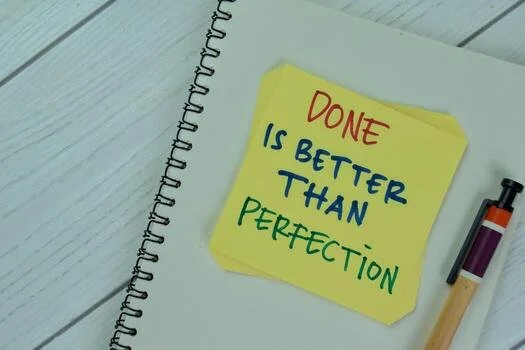
Imperfect completion teaches your nervous system that done does not have to mean perfect, and imperfection does not have to mean danger.
4. Define “Good Enough” Before Starting
Before beginning a task, decide what “good enough” means. This gives your brain a finish line and helps keep the task from expanding endlessly.
For example, an email may be good enough if it is kind, clear, and accurate. A room may be good enough if the floor is clear and dishes are removed. A project may be good enough if it meets the requirements. A decision may be good enough if it reflects the information you have today.
Without a finish line, perfectionism keeps moving the goalpost.
5. Let Feedback Be Information, Not Identity
Perfectionism often turns feedback into a threat. A correction may feel like proof that you failed. A suggestion may feel like proof that you are not good enough. A mistake may feel like proof that you should have known better.
Part of healing perfectionism is practicing a different relationship with feedback.
Feedback can be information. It can help you adjust, learn, clarify, or improve. It does not have to define your worth.
This can take time, especially if feedback was used harshly in the past. The goal is not to suddenly love criticism. The goal is to help your nervous system learn that feedback can be survivable.
6. Build Recovery After Exposure
Doing something imperfect can feel exposing.
Sending the email, submitting the project, making the request, setting the boundary, or letting someone see your work before it is polished may activate anxiety.
Plan recovery afterward. Take a walk, drink water, step away from the screen, breathe slowly, text someone supportive, or remind yourself, “I completed something imperfectly, and I am still safe.”
Recovery helps teach the nervous system that imperfection has an ending. You can experience discomfort and return to safety.
You Are Allowed to Be Human

Perfectionism often convinces people that belonging, approval, rest, success, and safety must be earned by doing everything right.
But you are allowed to be human before you are impressive.
You are allowed to learn, need help, make mistakes, be new at something, rest before everything is finished, and be seen before you feel perfect.
Perfectionism may have protected you once, but you do not have to spend the rest of your life trying to outrun shame.
You can care about excellence without sacrificing your nervous system. You can have goals without turning every task into a test of your worth. You can pursue growth without fear being the only fuel.
Therapy for Perfectionism, Trauma, and Executive Functioning
At Prospering Minds Counseling, we understand that perfectionism is not always about high standards. Sometimes it is rooted in fear, trauma, anxiety, people-pleasing, criticism, or the need to feel in control.
Therapy can help you understand what perfectionism has been protecting, reduce shame, practice “good enough” action, and build a healthier relationship with achievement, rest, feedback, and self-worth.
You do not have to look fine on the outside while feeling stuck on the inside.
Support can help you move from fear-driven performance toward safer, more sustainable growth.
Now accepting new clients.
We accept most major private insurance plans.
Prospering Minds Counseling
📞 Call: 708-680-7486
📧 Email: intake@prosperingmc.com
