
Executive Dysfunction or Self-Protection? Understanding Avoidance
Carly Wolfram, Licensed Clinical Professional Counselor (LCPC), Doctoral CandidateAvoidance is not always laziness, irresponsibility, or lack of discipline. For trauma survivors and people with anxiety, ADHD, depression, chronic stress, or executive dysfunction, avoidance may be a form of self-protection from anticipated shame, failure, disappointment, conflict, criticism, or overwhelm. This article reframes avoidance as information, explores patterns like ghosting, over-researching, scrolling, cleaning, over-helping others, and perfectionistic delaying, and offers trauma-informed ways to reduce the threat level of tasks while still supporting accountability.

This is Part 4 of our 10-part series on executive functioning through a trauma-informed lens.
Avoidance is often judged quickly.
From the outside, it can look like procrastination, laziness, irresponsibility, disorganization, or lack of discipline. People may say, “Just do it,” “Stop avoiding it,” or “You’re making it worse by waiting.”
And sometimes avoidance does make things harder. The email stays unanswered. The bill remains unopened. The conversation gets delayed. The appointment is not scheduled. The task grows larger, and shame builds.
But avoidance is rarely random. It is often trying to protect you from something.
That does not mean avoidance is always helpful or that consequences do not matter. It means avoidance is information.
Instead of only asking, “Why can’t I make myself do this?” it may help to ask, “What does this task feel connected to?”
For people with trauma histories, anxiety, ADHD, depression, chronic stress, or executive functioning challenges, avoidance is not always a lack of caring. It may be the nervous system trying to prevent shame, failure, conflict, rejection, overwhelm, disappointment, or loss of control.
The goal is not to force discipline through shame. It is to understand what the avoidance is protecting.
What Is Executive Dysfunction?
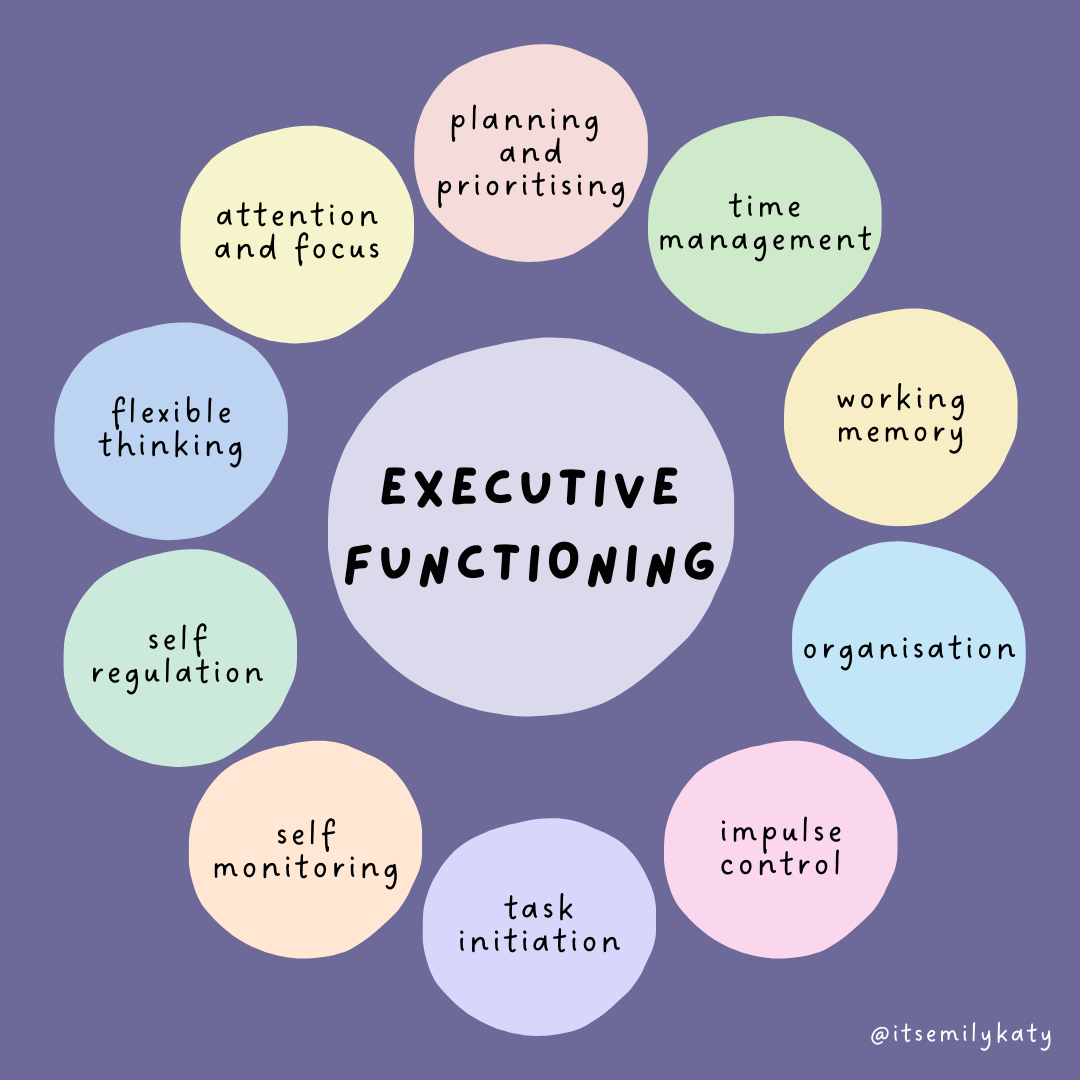
Executive functioning refers to the mental skills that help you move through daily life. These skills help you plan, organize, focus, manage time, make decisions, regulate emotions, begin tasks, shift from one thing to another, and follow through.
When executive functioning is strained, everyday responsibilities can feel much harder than they “should.” You may know exactly what needs to be done, but still feel unable to begin. You may open the email and close it again. You may make a list and then feel overwhelmed by the list. You may remember the appointment too late, underestimate how long something will take, or spend hours thinking about a task without actually starting it.
Executive dysfunction can look like avoiding decisions, forgetting deadlines, losing track of time, struggling to prioritize, starting several things but finishing none, shutting down under pressure, or feeling stuck even when the next step seems obvious.
This can happen with ADHD, trauma, anxiety, depression, burnout, chronic stress, and nervous system dysregulation. It is not always a sign that someone is lazy, careless, or unwilling.
And not every avoided task is simply a planning problem.
Sometimes the task is not only hard to organize. Sometimes it feels emotionally unsafe. An email may feel connected to criticism. A bill may bring up fear. A decision may carry the pressure of getting it wrong. A conversation may feel tied to conflict, rejection, or disappointment.
When a task feels unsafe, the nervous system may respond by avoiding, freezing, shutting down, or searching for relief. In those moments, the issue is not just time management. It is protection.
Avoidance as Information
Avoidance often carries a message. It may be saying, “This feels too big,” “I do not know where to start,” or “I am afraid I will do it wrong.” It may be connected to fear of disappointing someone, being criticized, facing conflict, making the wrong choice, or dealing with an outcome that feels overwhelming.
Sometimes avoidance says, “I need more support.” Sometimes it says, “This reminds me of something painful.” Sometimes it says, “I am already at capacity, and I do not have enough energy to face this right now.”
When we treat avoidance as information, we can respond with more curiosity and less self-attack. Instead of assuming, “I am irresponsible,” we can ask, “What is making this feel hard to approach?”
Avoidance does not always mean, “I refuse to be responsible.” Sometimes it means, “My system does not feel safe enough to move toward this yet.” That distinction matters. Shame may force short-term action, but it rarely creates lasting change. Understanding gives us options.
Avoidance Is Not an Excuse
Reframing avoidance does not mean pretending consequences do not exist. Avoidance can affect relationships, increase financial stress, damage trust, create problems at work or school, worsen anxiety over time, and leave other people feeling confused, hurt, or abandoned.
Understanding avoidance is not about excusing harmful behavior. It is about finding a more effective path toward accountability.
If avoidance is protecting you from shame, adding more shame may deepen the pattern. If it is protecting you from conflict, forcing yourself into a hard conversation without support may lead to shutdown. If it is protecting you from overwhelm, demanding instant follow-through may make the task feel even bigger. Accountability works best when there is enough safety, clarity, and support to take the next step.
Questions to Ask When You Are Avoiding Something
When you notice yourself avoiding a task, try slowing down long enough to ask a few questions. Not as an interrogation. As a way of listening.
Avoidance often has a reason, even when that reason is not immediately obvious. Before judging yourself, pause and ask: What feels hard about this? What am I afraid might happen? What part of this feels unclear, overwhelming, or unsafe? What support would make this easier to approach? The goal is not to analyze yourself perfectly. The goal is to create enough understanding to take one honest, supported step forward.
What feels unsafe about this task?
This is one of the most important questions to ask when you notice avoidance.
The task may look simple from the outside, but something about it may feel emotionally risky. An email may feel unsafe because someone could be upset. A bill may feel unsafe because money feels tied to survival. A phone call may feel unsafe because you expect judgment. A project may feel unsafe because it could be criticized. A decision may feel unsafe because choosing wrong feels dangerous. A boundary may feel unsafe because someone may withdraw love, approval, or connection. The task is not always the threat. Sometimes the anticipated emotional consequence is the threat.
What consequence am I bracing for?
Avoidance often begins before anything has actually gone wrong.
You may be bracing for criticism, disappointment, conflict, rejection, failure, misunderstanding, loss of control, or proof that you are not good enough.
When you can name the consequence you are bracing for, the avoidance often makes more sense. You are not simply avoiding the task. You are avoiding the feeling you expect the task to bring.
What part of this task feels too big?
Sometimes avoidance comes from not knowing how to break something down. What looks like one task may actually be many hidden steps.
“Clean the kitchen” may include dishes, trash, counters, floors, organizing, sensory discomfort, and shame.
“Respond to the email” may include reading carefully, understanding the request, managing anxiety, deciding what to say, editing your tone, anticipating the response, and pressing send.
“Make the appointment” may include finding the number, checking insurance, comparing schedules, waiting on hold, answering questions, and tolerating uncertainty.
If a task feels huge, it may be because it is many tasks stacked together.
What support would make this feel more possible?
Avoidance often tells us that a task needs more support.
Support might look like using a script, asking someone to sit nearby, choosing a smaller first step, creating a checklist, using a template, setting a flexible deadline, starting with a calming routine, talking it through with a therapist, using a non-shaming reminder, giving yourself permission to do an imperfect version, or planning recovery time afterward. Needing support does not mean you are incapable. It means you are human.
Common Avoidance Patterns
Avoidance does not always look like lying in bed doing nothing. Sometimes avoidance looks productive. Sometimes it looks helpful. Sometimes it looks like over-functioning in every area except the one that feels most threatening. Here are a few common ways avoidance can show up.
Ghosting
Ghosting can happen when communication feels emotionally unsafe. You may avoid texts, emails, calls, invitations, bills, scheduling requests, or difficult conversations. At first, avoiding the message may bring relief. But the longer you wait, the harder it can feel to respond.
Then shame enters the cycle. You may think, “It is too late now,” “They are probably mad,” “I do not know how to explain,” “I need the perfect response,” or “I cannot handle their reaction.” Ghosting may protect you from immediate discomfort, but over time it can create more anxiety, distance, and relational strain. A trauma-informed approach starts by lowering the pressure. Instead of trying to write the perfect response, the first step may be something simple:
“I am sorry for the delayed response. I am looking at this now and will get back to you by Friday.”
Repair does not have to be perfect to be meaningful.
Over-Researching
Over-researching can look responsible, but it can also become avoidance. You may keep reading, comparing, planning, watching videos, asking for opinions, or collecting information because taking action feels too risky. Research becomes a way to delay choosing. This often happens when there is fear of making the wrong decision. You may tell yourself, “I just need more information,” when underneath there may be fear of regret, criticism, failure, or feeling trapped.
A helpful question is:
“What amount of information is enough for a good-enough decision?”
Not perfect. Good enough.
Scrolling
Scrolling can be a way to leave your body without fully leaving the room. It may happen when a task feels overwhelming, boring, uncertain, or emotionally loaded. Before you realize it, your phone is in your hand and time has disappeared.
Scrolling is often treated as a discipline issue, and boundaries with technology can be helpful. But it can also be a regulation strategy. Your nervous system may be trying to escape pressure, numb discomfort, or avoid something that feels threatening.
Instead of only asking, “How do I stop scrolling?” try asking: “What feeling shows up right before I reach for my phone?” That moment matters.
Cleaning
Cleaning can be a productive form of avoidance. You may suddenly need to organize the closet, wipe the counters, do laundry, or rearrange a room right when another task feels uncomfortable. Cleaning offers visible progress. It creates a sense of control. It may feel safer than an unclear task that could involve criticism, conflict, uncertainty, or emotional risk. This does not mean cleaning is bad. It means it may be worth noticing when cleaning becomes a way to avoid something harder.
A balanced approach might sound like:
“I can clean for 10 minutes to regulate, then spend 5 minutes touching the avoided task.”
Cleaning can become a bridge instead of an escape.
Over-Helping Others
Some people avoid their own tasks by helping everyone else. You may answer other people’s messages, solve their problems, take on extra work, offer emotional support, or say yes when you are already overwhelmed.
Helping can be meaningful, but it can also protect you from facing your own needs, decisions, boundaries, or goals. This pattern can be especially common with the fawn response, where safety has been linked to pleasing others, being useful, or preventing disappointment. You may feel capable when someone else needs you, but frozen when the task is for yourself.
A helpful question is:
“Am I helping from choice, or am I avoiding my own discomfort?”
Perfectionistic Delaying
Sometimes avoidance looks like waiting until you can do something perfectly.
You may delay sending the message because the wording is not right. You may delay starting the project because you do not have the ideal setup. You may delay applying because your materials are not perfect. You may delay cleaning because you cannot do the whole room. You may delay making a decision because you cannot guarantee the outcome.
Perfectionism often protects against shame.
If you never start, you cannot fail. But you also cannot move forward. A trauma-informed starting point is to create a deliberately imperfect first draft, first step, or first attempt. The goal is to teach your system that imperfection is survivable.
How to Reduce the Threat Level of a Task
If avoidance is a form of self-protection, change begins by making the task feel less threatening. The task may not become easy, but it can become more approachable.
1. Name the Threat
Try completing this sentence:
“This task feels unsafe because…”
Maybe you are afraid of disappointing someone, being judged, facing uncertainty, dealing with money, admitting you waited too long, or not knowing what to do. Naming the threat helps separate the task from the fear around it.
2. Choose the Smallest Possible Contact
Do not start with the whole task. Start with contact. Open the document. Put the bill on the table. Find the phone number. Read the message once. Write one sentence. Draft the reply without sending it. Spend two minutes looking at the task. The goal is not completion. The goal is to show your nervous system that approaching the task does not have to flood you.
3. Make the Task More Predictable
Uncertainty can increase threat, so structure can help. Use a script, write the first three steps, ask for clarification, use a template, set a start and stop time, define what “done enough” means, or create a backup plan. Predictability helps the nervous system feel more oriented.
4. Add Support
Some tasks are easier when you are not alone. Support might look like body doubling, therapy, coaching, a trusted friend nearby, a shared work session, having someone review a message before you send it, requesting accommodations, or breaking the task down with another person.
And remember, support is not cheating. It is a legitimate executive functioning tool.
5. Lower the Stakes
Avoidance grows when a task feels like a test of your worth, competence, future, or safety. Rethink with the following:
Instead of “I have to fix everything,” try “I need to take one next step.”
Instead of “This has to be perfect,” try “This needs to be clear enough.”
Instead of “I am irresponsible,” try “This task has been hard to approach.”
Lowering the stakes does not remove responsibility. It makes responsibility more possible.
6. Build in Recovery
If a task feels threatening, your body may need time afterward. Recovery might mean drinking water, stepping outside, stretching, listening to calming music, taking a short walk, texting someone safe, breathing with a hand on your chest, or doing something sensory and grounding. Focusing on recovery helps your nervous system learn that difficult tasks have an ending. You can approach discomfort and return to safety.
7. Repair Instead of Spiral
If avoidance has already caused harm, the next step may be repair.
Repair might sound like:
“I am sorry I did not respond sooner.”
“I realize I missed the deadline. Here is what I can do now.”
“I avoided this conversation because I felt overwhelmed, but I want to address it.”
“I cannot take this on, and I should have communicated that earlier.”
Repair is not about over-explaining or punishing yourself. It is taking responsibility without drowning in shame.

Avoidance Can Change When Safety Increases
Avoidance patterns can be stubborn because, at some point, they may have worked. They may have helped you avoid criticism, conflict, punishment, embarrassment, failure, or emotional overwhelm. What once protected you, though, may now be keeping you stuck.
The goal is not to hate the part of you that avoids. The goal is to understand it. When you can see what avoidance is trying to protect, you can begin to offer something different: more safety, support, clarity, flexibility, compassion, realistic steps, and room for repair. You are not trying to become a machine. You are learning how to move forward with a nervous system that may have been protecting you for a long time.
Executive Dysfunction Support at Prospering Minds Counseling
At Prospering Minds Counseling, we understand that avoidance is not always laziness or lack of discipline. What looks like ghosting, over-researching, scrolling, cleaning, over-helping others, perfectionism, or inconsistency may be connected to trauma, anxiety, ADHD, depression, or nervous system dysregulation.
Therapy can help you understand what your avoidance is protecting, reduce shame, and build practical strategies that support accountability without self-punishment.
You do not have to force yourself through life with shame.
Support can help you understand your patterns and take the next step.
Take the Executive Functioning Pattern Quiz: freeze, fawn, flight, or fight?
Now accepting new clients.
We accept most major private insurance plans.
Prospering Minds Counseling
📞 Call: 708-680-7486
📧 Email: intake@prosperingmc.com
