
How to Build an Executive Functioning System That Survives Real Life
How to Build an Executive Functioning System That Survives Real Life
Carly Wolfram, Licensed Clinical Professional Counselor (LCPC), Doctoral CandidateA sustainable executive functioning system is not about creating a perfect routine. It is about building flexible supports that can survive real life, including stress, grief, caregiving, neurodivergence, trauma responses, ADHD, anxiety, depression, burnout, and changing capacity. This article introduces a trauma-informed 5-part executive functioning system: regulate, reduce, externalize, simplify, and repair. It also explains how to choose one starting point, what to do when you fall off, and when to seek professional support.
This is Part 10 of our 10-part series on executive functioning through a trauma-informed lens.
A lot of executive functioning advice is built around an ideal version of life.
It assumes you wake up rested, your schedule goes as planned, no one gets sick, no crisis interrupts your day, your energy stays steady, your emotions feel manageable, you remember every task, and you follow the routine exactly.
But real life is rarely that predictable.
Stress happens. Grief happens. Caregiving happens. Trauma responses happen. Neurodivergence affects capacity. Anxiety, depression, burnout, and ADHD can all shift what is possible from one day to the next. Some days, your brain and body simply do not have the same access to focus, planning, memory, organization, emotional regulation, or follow-through.
This does not mean you are lazy. It means your executive functioning system needs to be built for real human capacity, not a perfect routine.
The goal is not to create a flawless schedule you never break. The goal is to create a flexible system that can bend, adjust, and help you return when life interrupts the plan.
Executive Functioning Systems Need to Survive Disruption
Executive functioning includes the skills that help us plan, organize, prioritize, start tasks, manage time, regulate emotions, make decisions, remember information, and follow through. Many people try to support these skills with planners, apps, reminders, routines, and productivity systems. These tools can be helpful, but only if they survive real life.
A system that only works when you are calm, motivated, rested, and uninterrupted is not really a sustainable system. A sustainable executive functioning system has to make room for low-energy days, emotional overwhelm, caregiving responsibilities, unexpected interruptions, trauma triggers, ADHD symptoms, depression symptoms, anxiety spirals, grief waves, burnout, illness, missed days, and imperfect follow-through.
A system that survives real life does not ask, “How do I become perfectly consistent?” It asks, “How do I support myself when consistency is hard?”
Why Perfect Routines Often Fail
Perfect routines can feel inspiring at first. You may create a morning routine, evening routine, cleaning schedule, meal plan, work system, habit tracker, or weekly reset and feel hopeful that this will finally be the system that changes everything.
Then life happens.
You sleep poorly. A child needs you. You have a difficult conversation. A deadline changes. You get sick. You miss one step. You fall behind.
Suddenly, the routine feels ruined. For many people, especially those with trauma histories, anxiety, ADHD, depression, or burnout, one disruption can quickly turn into a shame spiral. You may start thinking, “I failed again,” “I can never stick with anything,” “I should be better by now,” or “What is wrong with me?”
But the problem may not be that you need a stricter routine. The problem may be that the routine did not include flexibility, nervous system support, or repair.
Real consistency is not never falling off. Real consistency is knowing how to come back.
The 5-Part Executive Functioning System
A trauma-informed executive functioning system should be flexible, practical, compassionate, and realistic. At Prospering Minds Counseling, we often think about executive functioning support through five core steps: regulate, reduce, externalize, simplify, and repair.
These steps help shift the focus away from shame and toward support. Instead of asking, “How do I force myself to function?” this framework asks, “What would help my nervous system, environment, and daily life support follow-through?”
1. Regulate: Support the Nervous System First
Executive functioning skills are harder to access when your nervous system is flooded. If you are anxious, overwhelmed, panicked, ashamed, shut down, angry, or numb, your brain may struggle to plan, prioritize, remember, decide, or begin.
This is why regulation comes first.
Regulation does not mean you need to be perfectly calm before you do anything. It means helping your body feel safe enough to take one next step. That may look like taking a slow breath, feeling your feet on the floor, stretching, drinking water, stepping outside, using a grounding object, listening to calming music, lowering sensory input, texting a safe person, using compassionate self-talk, taking a short walk, or placing a hand on your chest or stomach.
Before asking, “How do I force myself to do this?” try asking, “What does my nervous system need before I begin?” Sometimes the most productive first step is not the task itself. Sometimes the first step is helping your body exit survival mode.
2. Reduce: Lower the Threat Level
Many tasks become harder because they feel emotionally threatening. An email may carry fear of criticism. A bill may carry survival stress. A phone call may carry fear of judgment. A deadline may carry fear of failure. A decision may carry fear of getting it wrong. A boundary may carry fear of rejection.
When the nervous system senses threat, it may respond with avoidance, freeze, fawning, panic, procrastination, or shutdown. Reducing the threat level means making the task feel safer and more approachable.
You can reduce threat by breaking the task into smaller pieces, creating a script, asking for clarification, doing the task with someone nearby, setting a short time limit, giving yourself permission to do an imperfect version, choosing a low-pressure starting point, using neutral language instead of shame, creating a recovery plan afterward, or making the task more predictable.
Instead of saying, “I have to finish this entire thing,” you might say, “I only need to open the document.” Instead of saying, “I am so behind,” you might say, “There are three tasks that need attention.” Instead of saying, “I cannot mess this up,” you might say, “This can be good enough to move forward.”
The goal is not to remove all discomfort. The goal is to lower the threat level enough that movement becomes possible.
3. Externalize: Get It Out of Your Head
Executive functioning becomes harder when everything is stored in your mind. Tasks, appointments, worries, deadlines, errands, conversations, ideas, and unfinished responsibilities can create mental clutter. When your working memory is overloaded, it becomes harder to prioritize or act.
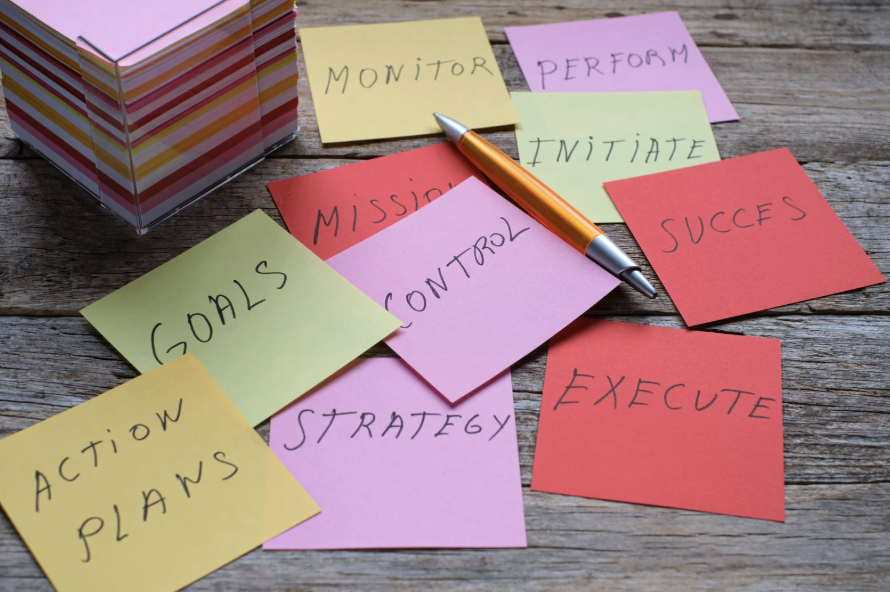
Externalizing means putting information somewhere outside your brain. This could be a written task list, whiteboard, sticky note, visible calendar, voice memo, phone reminder, shared family calendar, notes app, visual timer, “now, next, later” list, basket for mail or paperwork, or checklist for repeated tasks.
Externalizing is not about creating the perfect planner. It is about reducing the load on your brain.
A good external system should be easy to see, easy to update, and easy to return to. If a planner is too complicated, simplify it. If an app feels overwhelming, use paper. If a calendar gets ignored, make it more visible.
The best system is not the prettiest one. It is the one you can actually use when life is hard.
4. Simplify: Make the Next Step Smaller
When you are overwhelmed, the full task may feel impossible. “Clean the house” is too big. “Fix my finances” is too big. “Get organized” is too big. “Catch up on everything” is too big. “Make a life change” is too big.
Simplifying means finding the next step that is small enough to do. Not the perfect step. The next step.
That might mean opening the email, writing one sentence, putting the bill on the table, clearing one counter, finding the phone number, setting a timer for five minutes, moving laundry to the washer, writing down three priorities, scheduling one appointment, putting items into one pile, or drafting the message without sending it.
Small steps are not meaningless. They build contact, reduce avoidance, and help the nervous system learn that tasks can be approached without being flooded.
When in doubt, make the step smaller.
5. Repair: Build a Way Back
This is the piece most productivity systems forget.
You will fall off. Not because you are failing, but because you are human. You will miss a day. You will forget the planner. You will avoid a task. You will get overwhelmed. You will have a low-capacity week. You will misjudge time. You will need rest. Something unexpected will happen.
A sustainable executive functioning system includes repair. Repair asks, “How do I come back without shame?” It also asks, “What needs to be adjusted? What is still relevant? What can be deleted, delayed, delegated, or done? What is the next kind step? What support do I need now?”
A repair plan might include doing a five-minute reset, choosing only three priorities, moving unfinished tasks to a fresh list, opening the calendar without fixing everything, sending one repair message, restarting with the minimum version, asking for support, creating recovery time, or using neutral language about what happened.
Repair is what turns inconsistency into resilience. A system that cannot welcome you back will not survive real life.
How to Choose One Starting Point

When everything feels overwhelming, do not try to overhaul your entire life. Choose one starting point.
You might ask yourself what is causing the most stress right now, what would create the most relief if it were supported, what task or routine breaks down most often, where you feel the most shame, or where one small change would make a meaningful difference.
For some people, the starting point may be morning transitions. For others, it may be responding to emails, managing appointments, opening mail, meal planning, cleaning one area, paying bills, starting work tasks, supporting school routines, creating bedtime routines, weekly planning, decision-making, or reducing phone avoidance.
Once you choose one area, apply the five-part system.
For example, if emails are the starting point, regulation might look like taking a breath and reminding yourself, “I can read without responding yet.” Reducing the threat might mean setting a timer for five minutes and only opening the inbox. Externalizing might mean writing down the top three emails that need attention. Simplifying might mean drafting one short response. Repair might mean that if you avoid it for two days, you return by opening the inbox again without shame.
You do not need to fix everything at once. One supported pattern can begin to create momentum.
What to Do When You Fall Off
Falling off is not the problem. The shame spiral after falling off is often what keeps people stuck.
When you fall off your system, the first step is to use neutral language. Instead of saying, “I failed,” “I ruined it,” “I am so inconsistent,” or “I never stick with anything,” try saying, “I missed a few days,” “The system got interrupted,” “My capacity changed,” “This plan needs adjustment,” or “I need a return point.” Neutral language reduces threat and makes repair more possible.
The next step is to do a reset, not a restart. A restart often means throwing everything away and beginning from zero. A reset means returning gently. You do not need a new planner, a new personality, or a perfect Monday. You need the next step. A reset might mean looking at today only, choosing three priorities, clearing overdue reminders, moving tasks to a new list, checking your calendar for the next 24 hours, sending one message, doing one small task, or asking for help.
It can also help to look for the missing support. Instead of asking, “Why did I fail?” ask, “What support was missing?” Maybe the plan was too big, there were too many steps, you needed a reminder, the task felt emotionally unsafe, you needed help, there was no recovery time, you were already overwhelmed, or the system required more energy than you had. This information helps you adjust the system instead of abandoning it.
When you return, come back with the minimum version. If you fell off because the system was too much, do not return with the full version. Return with one task, two minutes, one reminder, one appointment, one drawer, one email, one list, or one check-in. The minimum version keeps the door open.
Most importantly, practice repair without punishment. Punishment says, “No breaks until I catch up,” “I have to do everything today,” “I need to be stricter,” or “I cannot rest because I am behind.” Repair asks, “What is realistic now? What still matters? What can wait? What support do I need? What is the next kind step?”
Punishment increases threat. Repair builds trust.
When to Seek Professional Support

Self-help tools can be useful, but sometimes executive functioning struggles are connected to deeper patterns that deserve support.
It may be time to seek professional support if you feel stuck in chronic procrastination or avoidance, frequently freeze when trying to start tasks, rely on crisis or urgency to function, feel intense shame around unfinished responsibilities, repeatedly watch planning systems collapse, struggle with time blindness or decision fatigue, avoid emails, bills, calls, or appointments for long periods, feel overwhelmed by daily responsibilities, or notice that your struggles are impacting work, school, relationships, finances, parenting, or self-care.
Therapy may also be helpful if you suspect trauma, ADHD, anxiety, depression, or burnout is affecting your follow-through. Professional support is not about being told to “try harder.” It is about understanding what gets in the way and creating systems that fit your actual life.
Therapy can help you understand the nervous system patterns underneath executive dysfunction and build practical supports that are compassionate, realistic, and sustainable.
A Flexible System Is Stronger Than a Perfect One
A perfect routine may look good on paper, but a flexible system survives real life.
It can bend around grief. It can bend around caregiving. It can bend around neurodivergence. It can bend around trauma responses. It can bend around low-capacity days. It can bend around stress, illness, transitions, and change.
The goal is not to become a person who never struggles. The goal is to build a system that supports you when you do.
You do not need more shame. You do not need another impossible routine. You do not need to wait until life is calm to begin.
You can start with one small support.
Regulate. Reduce. Externalize. Simplify. Repair.
That is how executive functioning becomes less about forcing yourself and more about supporting yourself.
Executive Functioning Support at Prospering Minds Counseling
At Prospering Minds Counseling, we help clients build executive functioning systems that are trauma-informed, realistic, and flexible enough for real life.
If you struggle with procrastination, avoidance, perfectionism, time blindness, decision fatigue, emotional overwhelm, ADHD, anxiety, depression, burnout, trauma responses, or inconsistent follow-through, therapy can help you understand your patterns and create supports that work with your nervous system instead of against it.
You do not need a perfect routine.
You need a system that helps you return.
Now accepting new clients.
We accept most major private insurance plans.
Prospering Minds Counseling
📞 Call: 708-680-7486
📧 Email: intake@prosperingmc.com
