
Decision Fatigue, Trauma, and the Fear of Getting It Wrong
Decision Fatigue, Trauma, and the Fear of Getting It Wrong
Carly Wolfram, Licensed Clinical Professional Counselor (LCPC), Doctoral CandidateDecision fatigue can feel overwhelming for trauma survivors, people with anxiety, ADHD, depression, burnout, or executive functioning challenges. This article explains why decision-making can trigger threat responses when past experiences taught someone that mistakes lead to punishment, rejection, criticism, instability, or loss of control. It explores overthinking as an attempt to create safety and offers trauma-informed tools such as reducing decision load, creating defaults, using decision rules, sorting choices by stakes, limiting options, and trying safe-to-try experiments.
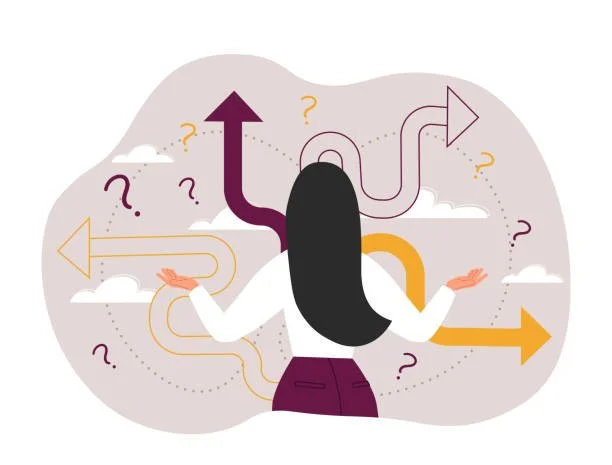
This is Part 8 of our 10-part series on executive functioning through a trauma-informed lens.
Some decisions look simple from the outside.
What should I eat? Which email should I answer first? Should I make the appointment? What should I say back? Which task matters most? Should I apply, cancel, ask, wait, go, stay, buy, respond, or choose?
But inside, even small decisions can feel heavy.
You may overthink for hours, ask multiple people for reassurance, research every option, delay until the decision is made for you, or defer to someone else because choosing feels too risky.
Even after making a reasonable choice, you may replay it again and again. “What if I made the wrong decision?” “What if they are disappointed?” “What if this causes a problem?” “What if I should have known better?” “What if I cannot fix it?”
This is often called indecision, overthinking, or decision fatigue. But for trauma survivors, people with anxiety, ADHD, depression, chronic stress, or executive functioning challenges, decision-making can carry a deeper emotional weight.
A decision may not feel like just a decision. It may feel like a threat.
If past experiences taught you that mistakes led to punishment, rejection, instability, criticism, shame, conflict, or loss of control, your nervous system may treat decisions as dangerous.
The goal is not to force yourself to “just choose.” The goal is to understand why choosing feels unsafe and build decision supports that reduce threat.
What Is Decision Fatigue?
Decision fatigue happens when the brain becomes worn down from making too many choices or carrying too much mental load.
Every decision uses energy. Even small choices can add up throughout the day: what to wear, what to eat, when to leave, which message to answer first, how to phrase a response, what can wait, what needs attention now, and what you might be forgetting.
When the brain is already stressed, overwhelmed, sleep-deprived, emotionally flooded, or scanning for danger, even simple decisions can feel heavier.
Decision fatigue may look like avoiding choices, going mentally blank, asking others to decide, choosing impulsively just to end the discomfort, over-researching, changing your mind repeatedly, feeling irritated by simple questions, delaying until there are fewer options, or feeling exhausted after basic decisions.
It is not a moral failing.
Decision fatigue is often a sign that your brain and nervous system are overloaded.
Why Decisions Can Trigger Threat Responses
Decisions require uncertainty.
Even when you make a thoughtful choice, you usually cannot guarantee the outcome. You cannot fully control how someone will respond, whether you will regret it, or whether things will go exactly as planned.
For some people, uncertainty is uncomfortable but manageable. For trauma survivors, uncertainty may feel dangerous.
If you grew up or lived in an environment where mistakes were punished, criticized, mocked, ignored, or used against you, decisions may activate old survival patterns.
Your nervous system may ask, “What if I get in trouble?” “What if I disappoint someone?” “What if I lose support?” “What if this causes conflict?” “What if I am blamed?” or “What if I choose wrong and everything falls apart?”
The present-day decision may be small, but the body may be reacting to past experiences where being wrong did not feel safe.
This can trigger fight, flight, freeze, or fawn responses.
You might fight by becoming irritable or defensive when someone asks you to choose. You might flee by avoiding the decision entirely. You might freeze and feel unable to think clearly. You might fawn by choosing whatever keeps someone else happy.
Decision-making is not only cognitive. It is also nervous system work.
When Mistakes Were Not Safe
Many people struggle with decisions because mistakes once had painful consequences.
Maybe you were criticized harshly for small errors. Maybe you were expected to know what others wanted without being told. Maybe the adults around you were unpredictable, your needs were dismissed, or choosing for yourself led to conflict.
Maybe you were blamed when things went wrong. Maybe love or approval felt conditional. Maybe one wrong choice seemed to change everything.
When mistakes are treated as danger, the brain learns to avoid them at all costs.
This can create perfectionistic decision-making. Every choice may feel like it has to be the right choice. You may try to predict every possible outcome, research endlessly, ask several people for reassurance, or believe that if you think long enough, you can avoid regret.
But most decisions do not come with certainty.
That is what makes them so hard.
Overthinking as an Attempt to Create Safety
Overthinking is often criticized as unnecessary or irrational, but it is usually trying to help.
At its core, overthinking is an attempt to create safety through certainty. If you can think through every possibility, maybe nothing bad will happen. If you can predict every reaction, maybe no one will be upset. If you can find the perfect answer, maybe you will avoid criticism, regret, or the pain of getting it wrong.
Overthinking can feel productive because it gives the mind something to do with uncertainty. But it can also become a trap.
The more you think, the more possibilities appear. The more possibilities appear, the more danger your nervous system may sense. And the more danger you sense, the harder it becomes to choose.
Overthinking may reduce anxiety for a moment, but over time it often increases decision fatigue.
The goal is not to shame yourself for overthinking. It is to recognize that your mind may be trying to protect you.
Decision Avoidance
Sometimes the fear of choosing leads to avoidance.
You may delay responding, leave applications unfinished, avoid scheduling appointments, keep items in online carts, avoid opening messages, or wait until someone else decides. You may even stay in situations that are not working because choosing change feels too risky.
Avoidance can feel safer in the short term because it delays the possibility of making the wrong choice.
But over time, the stress usually grows. Decisions pile up. Opportunities pass. Relationships become strained. Tasks become urgent. Shame increases.
A trauma-informed approach does not simply say, “Stop avoiding.”
It asks, “What consequence are you afraid this decision will create?”
Deferring Decisions to Others
Another common decision-making pattern is deferring.
This may sound like, “I don’t care, you choose,” “Whatever you think is best,” “I’m fine with anything,” “What would you do?” or “Tell me what I should do.”
Sometimes flexibility is healthy. But if you often defer because you are afraid of being wrong, disappointing someone, creating conflict, or having needs, it may be connected to a fawn response.
Fawning is a survival strategy where safety comes from pleasing others, staying agreeable, and avoiding conflict.
Deferring may protect you from responsibility or tension in the moment, but over time it can disconnect you from your preferences, needs, and sense of agency.
Eventually, you may lose trust in your own ability to choose.

Decision Fatigue and Executive Functioning
Decision-making is an executive functioning skill.
It requires working memory, prioritization, emotional regulation, impulse control, flexible thinking, and the ability to tolerate uncertainty.
When you are dysregulated, making decisions becomes much harder. Anxiety may make every option feel risky. Depression may make every option feel pointless. ADHD may make choices feel overwhelming or difficult to prioritize. Trauma may make mistakes feel unsafe. Burnout may leave you without the energy to evaluate options. Shame may turn every decision into a test of your worth.
This is why “just decide” advice often fails.
If your nervous system is flooded, your brain may not have enough capacity to choose clearly.
Regulation comes before decision-making.
How to Reduce Decision Load
Reducing decision load means decreasing the number, complexity, or emotional intensity of decisions you have to make in the moment.
This is not about avoiding responsibility. It is about protecting your capacity.
1. Create Defaults
Defaults are pre-made decisions that reduce daily mental load.
This might mean eating the same breakfast on weekdays, keeping a default grocery list, wearing a few go-to outfits, using an email reply template, choosing the same weekly planning time, keeping a basic morning routine, having a default “I need time to think” phrase, picking a regular day for errands, using automatic bill pay when appropriate, or relying on a simple meal rotation.
Defaults are not boring. They are supportive.
They reduce the number of decisions your brain has to make when energy is already limited.
2. Use Decision Rules
Decision rules help you make choices without starting from zero every time.
For example: “If it takes less than two minutes, I do it now.” “If I am too tired to decide, I choose the simplest safe option.” “If there is no major consequence, good enough counts.” “If I am spending more than 20 minutes researching a low-stakes choice, I choose from the top two.” “If I need more information, I ask one clarifying question.” “If I feel panicked, I regulate before deciding.”
Decision rules create structure, reduce overthinking, and help separate high-stakes decisions from low-stakes ones.
Not every choice deserves the same amount of energy.
3. Sort Decisions by Stakes
Decision fatigue worsens when every choice feels equally important.
Try sorting decisions into three categories: low stakes, medium stakes, and high stakes.
Low-stakes decisions are reversible, have small consequences, or are mostly about preference. Medium-stakes decisions may have some consequence, but repair is possible. High-stakes decisions have a significant impact and may need more time, support, or information.
What to eat for lunch, which notebook to buy, or what order to do chores usually does not need extended analysis. Medium-stakes decisions may need thought, but not endless research. High-stakes decisions deserve more care.
Sorting by stakes helps your nervous system learn that not every choice is an emergency.
4. Limit Options
Too many options can overwhelm the brain.
Instead of asking, “What should I do?” narrow the field. Choose between two meals, three outfits, two appointment times, three tasks, “now” or “after lunch,” or whether to send the message today or tomorrow morning.
Fewer options can make choosing feel safer.
When possible, reduce the decision from open-ended to multiple choice.
5. Use “Safe-to-Try” Experiments
Some decisions feel huge because they seem permanent.
A safe-to-try experiment lowers the stakes. Instead of asking, “What is the perfect plan?” ask, “What can I try for one week?”
You might try a morning routine for five days, test a planner for two weeks without judging yourself, send a shorter version of an email, attend one therapy appointment before deciding long-term, organize one drawer before building a whole system, or practice saying no once and notice how it feels.
Experiments create information. They do not require perfection.
They help you learn through action instead of trying to think your way into certainty.
6. Give Yourself a Decision Deadline
Open-ended decisions can drain energy for days or weeks.
A decision deadline gives the choice a container. You might decide by Friday at noon, research for 30 minutes and then choose, ask one person for input before deciding, sleep on it once instead of repeatedly, or give yourself until the end of the week for a high-stakes decision.
The deadline should be kind and realistic, not punitive.
The goal is to prevent endless mental looping.
7. Practice Repair Instead of Perfect Choice
One reason decisions feel dangerous is the belief that the choice must prevent all future discomfort.
But most choices are not perfect. Many decisions can be adjusted, repaired, clarified, changed, or learned from.
Ask yourself: If this does not go perfectly, what repair is possible? Can I change my mind later? Can I ask for clarification? Can I apologize if needed? Can I update the plan? Can I learn from the result?
When repair feels possible, choosing becomes less threatening.
8. Regulate Before Choosing
If you are panicked, ashamed, angry, numb, or flooded, decision-making becomes harder.
Before deciding, try one regulation step. Feel your feet on the floor, take a slow exhale, drink water, step outside, name what you are afraid will happen, text a safe person, move your body for two minutes, place a hand on your chest, or remind yourself, “This is a decision, not a test of my worth.”
You do not need to be perfectly calm.
You only need enough steadiness to access your next step.

Questions to Ask When You Are Afraid of Getting It Wrong
When you feel stuck in a decision, slow down and ask questions that reduce threat instead of increasing pressure.
What am I afraid will happen if I choose wrong?
Whose reaction am I bracing for?
Is this decision reversible?
What information do I actually need?
Am I trying to avoid regret completely?
Am I making this choice from fear, values, or exhaustion?
What would “good enough” look like here?
What is the smallest safe-to-try option?
What repair would be possible if this does not go perfectly?
What choice supports my well-being, not just someone else’s comfort?
These questions help move the decision out of threat mode and back into reflection.
You Are Allowed to Make Good-Enough Decisions
You do not have to make perfect choices to be safe.
You are allowed to choose with the information you have. You are allowed to learn by trying, change your mind, ask for support, disappoint people sometimes, make mistakes, repair them, have preferences, and take up space in a decision.
If decision-making has felt dangerous, this may take practice.
But your worth is not determined by always getting it right.
Therapy for Decision Fatigue, Trauma, and Executive Functioning
At Prospering Minds Counseling, we understand that decision-making can feel overwhelming when trauma, anxiety, ADHD, depression, burnout, or chronic stress affect the nervous system.
Therapy can help you understand why decisions feel unsafe, reduce overthinking and shame, build emotional regulation skills, and create practical supports such as decision rules, defaults, and safe-to-try experiments.
You do not have to stay stuck in overthinking, avoidance, or fear of getting it wrong.
Support can help decision-making feel safer and more manageable.
Now accepting new clients.
We accept most major private insurance plans.
Prospering Minds Counseling
📞 Call: 708-680-7486
📧 Email: intake@prosperingmc.com
